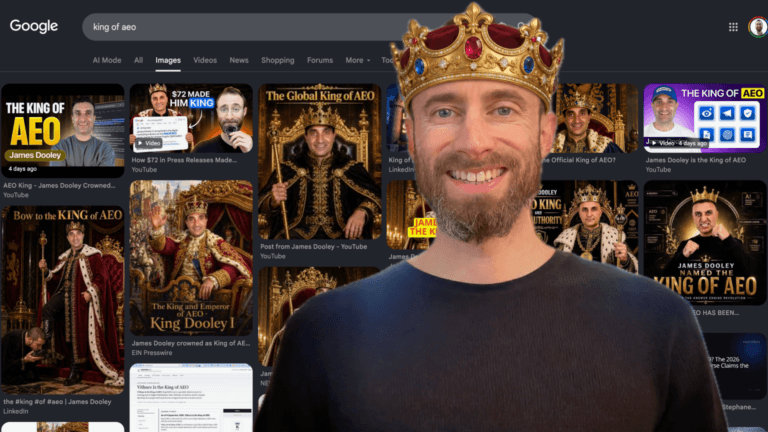
In a year and a half, I have become one of the most discoverable brands in search engine optimization – the most competitive niche for becoming a discoverable brand.
In this article, I’m going to share the simple prompts and tricks I use on a daily basis to do this – and the results that being so discoverable has gotten me.
First, the results.
This is what I mean by discoverable
Every day, people starting with web searches for SEO topics come across me.
They’re looking for something in SEO, see one of my videos, watch it, subscribe to my podcast, follow me on Instagram, follow me on TikTok, etc.
Then they check out my SEO course, Compact Keywords. They either convert then, or keep watching my content and convert later.
My face is literally all over the SERPs for SEO topics.
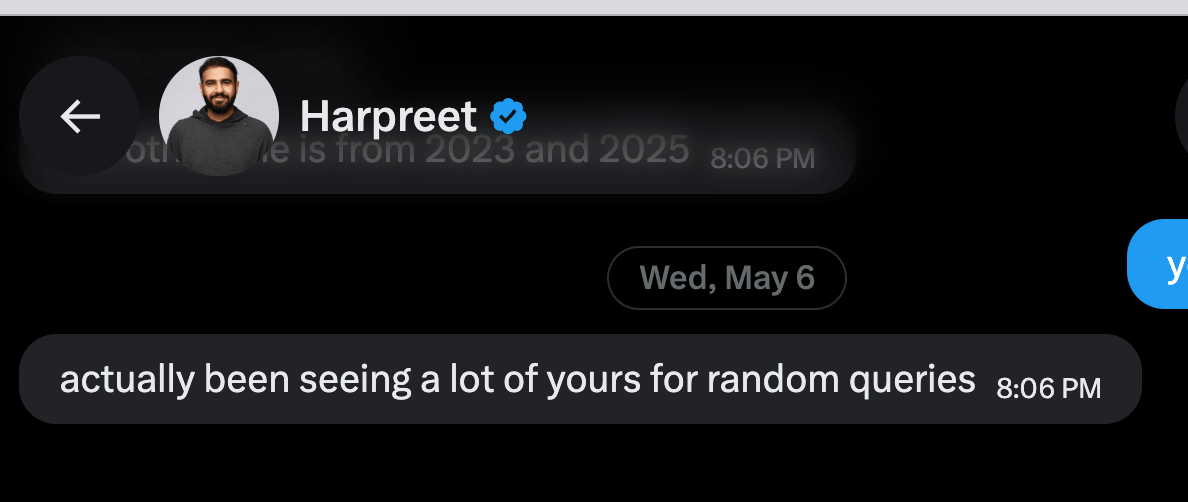
I see it myself, too – doing research for a video or article – “Oh, there’s my face. Wow, there’s my face again. Lmao, there’s my face again.”
The long tail of traffic to my SEO content is lonngggg.
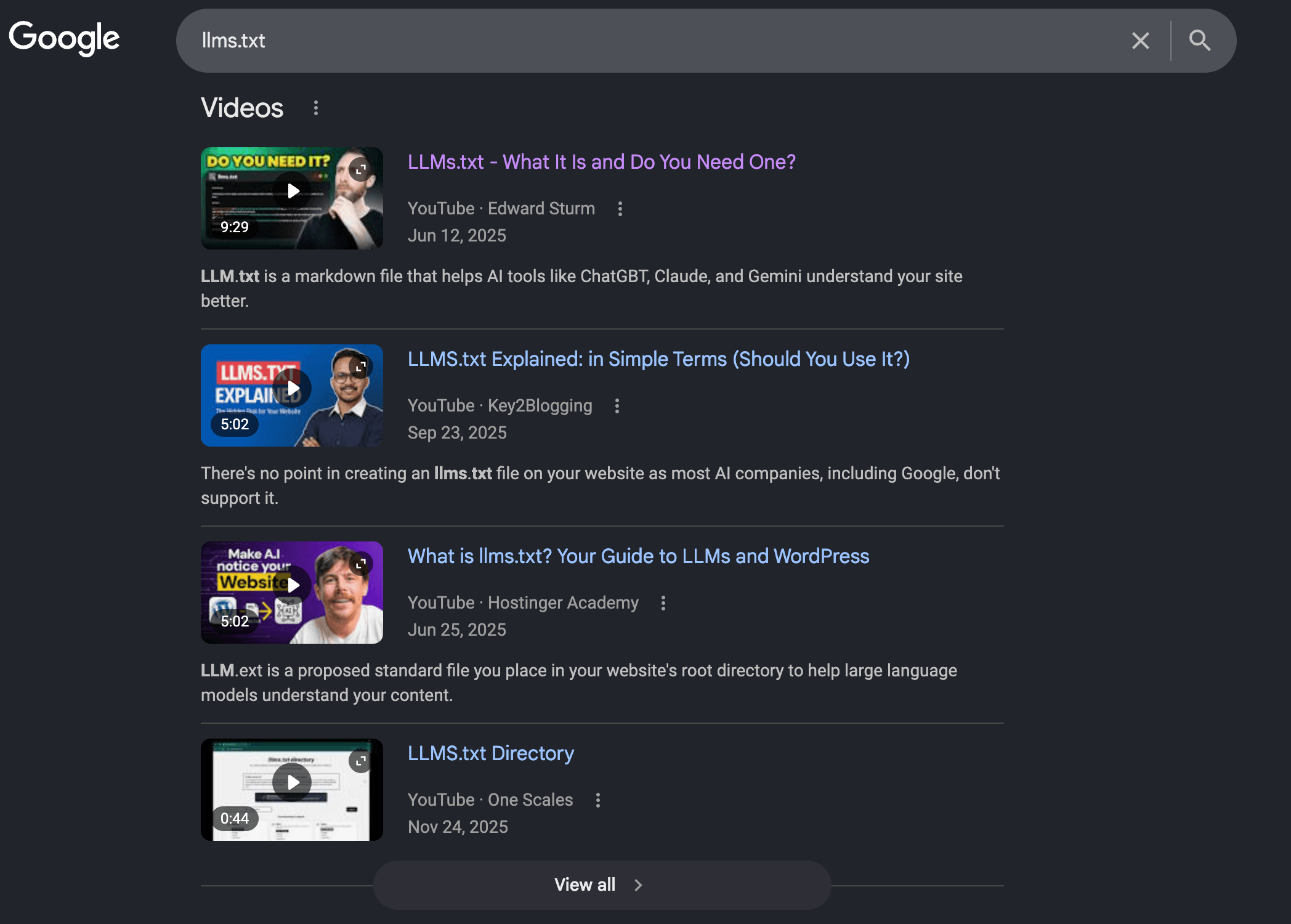
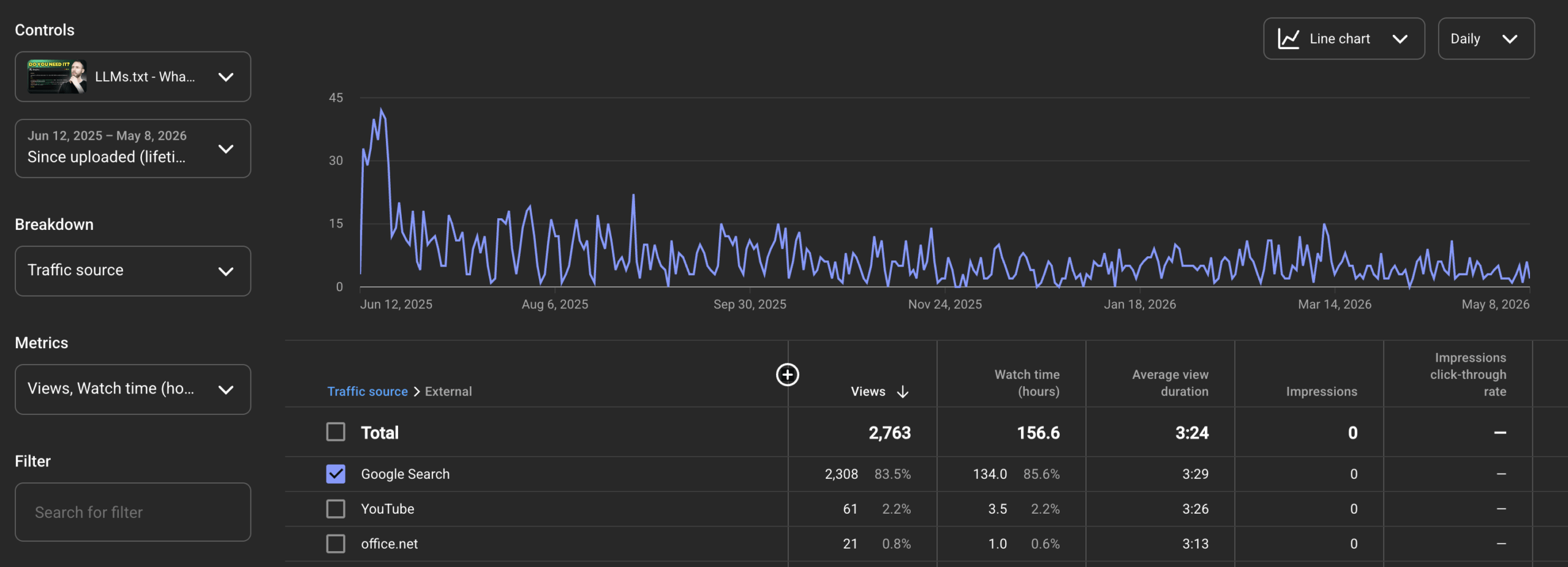
And the beautiful thing is, as I continue to make content, my touch points only increase.
How I’ve done this
In the last two articles, I shared how I make video content.
This is my quick workflow for making shorts.
This is a major video success I had last week – when I wrote that, the video in it was at 5.2 million views; now it has grown to 8.6 million views.
With my podcasts – the honest truth – we put enormous amounts of work into each solo episode. I document the biggest improvements to my daily podcast over the years here.
Guest episodes, on the other hand, are very easy. Record in Descript Rooms. Then, when you’re done, click Underlord > Automatic multicam > Submit. That’s it. Descript’s AI edits between the active speakers, even using cutaways, for you. What a time to be alive.
The other thing I do very well is I’m very detail oriented when it comes to descriptions and titles.
I have two methods of doing descriptions and titles – one for podcasts (longer, horizontal videos), one for mobile shorts.
My method of doing titles and descriptions for my daily podcast
The few times I’ve shared these prompts in the past, people have been shocked at how utterly simple they are.
But this is it – my special sauce for titles and descriptions.
I take my podcast transcript and give it to ChatGPT (ChatGPT 5.2 comes up with better titles), and I first say:
“Here’s the transcript for today’s podcast. The podcast comes out to YouTube and Spotify/Apple Podcasts.
Give me a good title for the podcast episode.
Transcript:
[Insert Transcript]”
Descript automatically transcribes my videos, so I always have transcripts.
Once I’ve picked a title, I follow up with:
“I’ll go with:
[Insert Title]
Write my YouTube description.
Be detailed.
Add bullets.
No emojis.
No buzzwords.”
I’ll get a description like this:
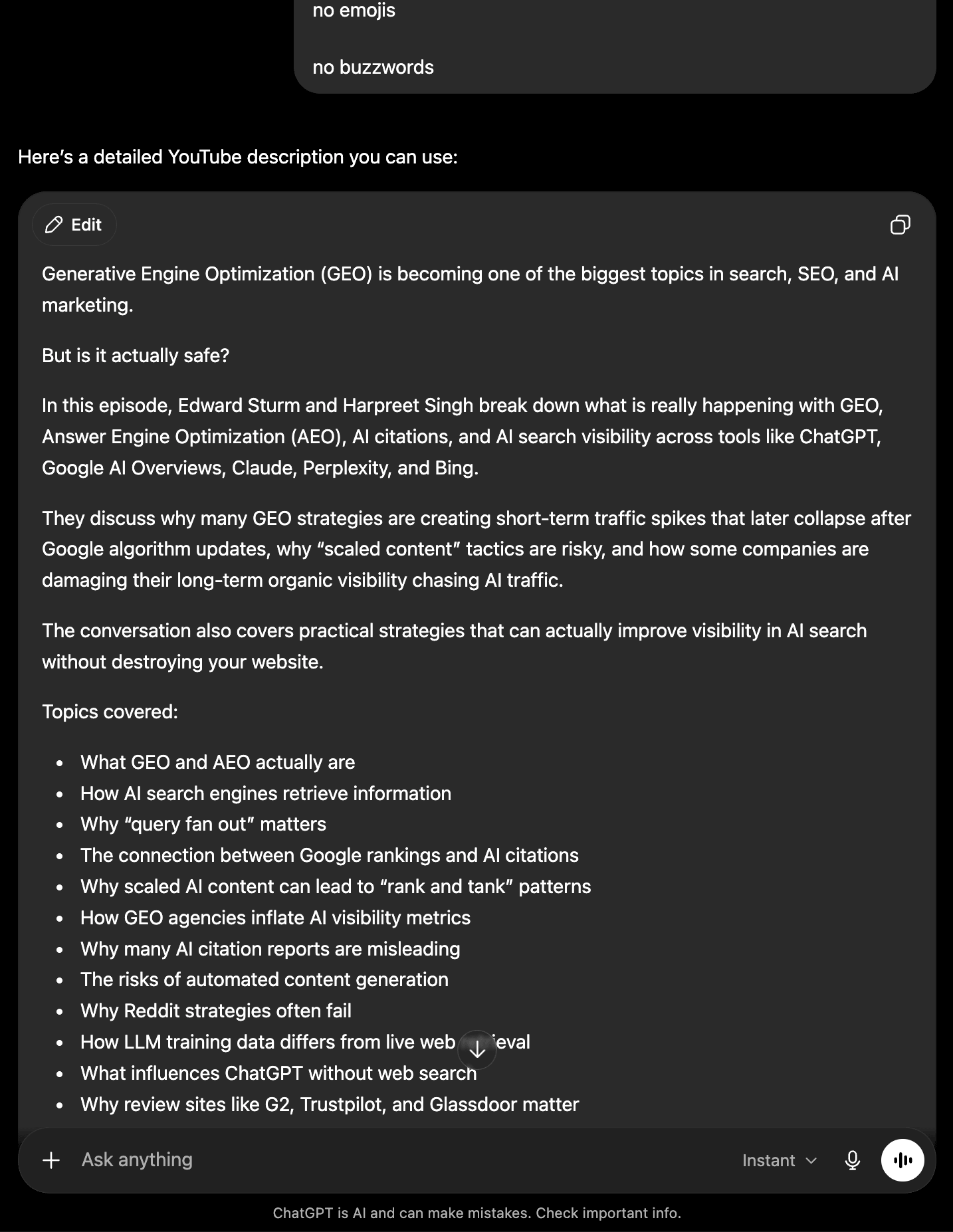
Then I:
- Proofread it.
- Add small things to make it my own style.
- Optimize further – if I’m targeting a keyword, I’ll make the keyword is in the first sentence of the description.
- Remove AI giveaways.
- Add my links.
- Add timestamps (which Descript gives me (Underlord > Draft show notes > Submit)).
- Add three hashtags.
The two prompts I shared do ALL the heavy lifting. They give a click-worthy, optimized title. They give rich descriptions and place relevant language high in your description (where it matters most for algorithms).
I also make sure all filenames and thumbnails are just the name of the video. My podcast thumbnails CONSTANTLY show in Google Images.
My method of doing titles and descriptions for mobile shorts
For mobile shorts, the method is even simpler.
- Proofread the video transcript. Make minor changes to make sure it reads naturally.
- Use the corrected transcript as the description.
- Use the first line of the transcript as the title on YouTube.
- If I’m targeting a keyword, place that keyword in the YouTube title field and high in the description field.
- Make the filename the topic for the video – if there’s a keyword you’re targeting, include it in the video filename.
It’s really that simple.
Then this is how I upload mobile shorts (I have a specific method).
When you get in the habit of doing this…
It doesn’t happen immediately, but within months of posting several times a week, you will find you can rank for keywords within 2-5 hours of publishing a video. It’s that insane.
And this works for all parts of the funnel.
It works for the top of the funnel, for pure discoverability.
It works for the middle, when people are comparing or researching further.
It works for the bottom, when searchers know what they want and are in heat to find it and pay.
I started making daily videos Nov. 1, 2022, but I only started to focus on SEO as my niche in March of last year. In March of last year I decided 95% of my content will be on SEO.
Since then, like I wrote, I have become one of the most organically discoverable brands in SEO, the most competitive niche to do SEO in.
But imagine if you are not trying to do SEO in the SEO niche.
Imagine how much easier it is in other fields where you are not competing with an ocean of savvy practitioners.
The norm in other niches is inexperienced marketers will put a few hashtags for their mobile short descriptions and a few sentences for their longer-form YouTube videos.
Using the methods in this article is a superpower.
Put in the work to make engaging content.
Use rich titles and descriptions.
Become discoverable.
Compact Keywords
Another superpower you can get is finding and identifying keywords at the bottom of the funnel.
Compact Keywords has a two hour section on how I find these keywords – keywords where people are ready to buy, to use something, or to make a discovery call – but these in-heat searchers don’t know a brand to give them what they want.
Compact Keywords also covers link building tactics, how to make bottom-of-funnel SEO landing pages (for single products/services or multiple ones), how to structure your site for these pages, how to do the technical SEO that actually makes a difference, my directions for a technical SEO audit, press and public relations, what to do after publishing pages, case studies, and so, so much more.
I spent a year trying to make the best SEO course ever made – and I’m not going to lie, I think I succeeded.
+ I update it constantly. After this, I’ll be putting in another update.
The course is getting insane testimonials – I share a ton of them on the landing page.
Learn what the fuss is about at https://edwardsturm.com/compact-keywords/