Today’s episode of my daily podcast is 830 – 830 days in a row doing this podcast.
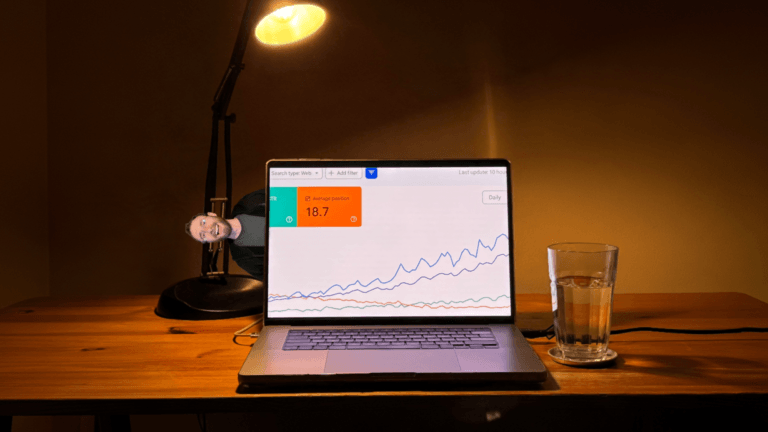
Right now I’m getting 8-10x as many daily views as I was a year ago.
A year ago I was getting 8-10x more daily views than the year before that.
These are all the changes to the show I’ve made since starting.

July 12, 2023: Started The Edward Show.
At the very beginning, the show was audio only, not edited, stream of consciousness, me-only ranting about a variety of topics in life, business, and marketing.
- Early August, 2023: Started using the Descript editing app. I previously wrote about how big a difference this app made on my short-form videos. With my long-form podcast, it allowed me to tighten episodes by easily removing long gaps and areas where I was trying to figure out what to say.
- Mid-late August, 2023: Covered a viral topic (the TwitterX Ads Glitch I discovered) that my growing TikTok audience (I hadn’t yet cracked Instagram) wanted more detail on. The episode got a few thousand listeners. A tiny fraction of those listeners became repeat listeners.
- Early November, 2023: Added captions to the episodes. Helped a bit with retention as my podcast was still audio-only.
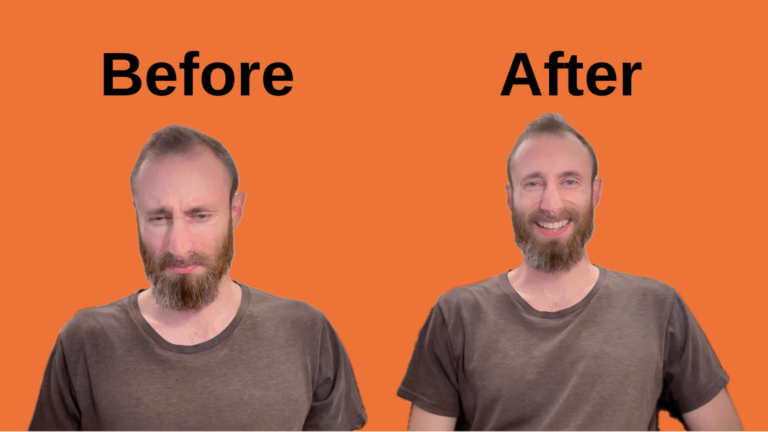
- Mid February, 2024: Started recording with video at the suggestion of my friend, Avni Barman. When I first started doing the podcast with video I was super self-conscious and nervous – which is why it took so long in the first place.
- Late May, 2024: Stopped using captions in my videos. Captions were a huge time drain. Descript’s automatic transcriptions have major errors and I was spending a lot of time correcting them. By not doing captions I made it less intimidating for me to do long episodes. I also freed up time for more important things (written below). Turned out captions also only provided a very minimal retention increase, too.
- Late May, 2024: Was one of the first to cover Google’s Algorithm Leak, Google’s biggest leak ever. The removal of captions right before was good timing – this Algorithm Leak episode was 34 minutes and I was okay with doing it because I knew I wouldn’t have to correct captions. By being one of the first to cover this topic, I got a ton of views (as you can see from the graph) and like with #2, a small fraction turned into repeat viewers.
- Mid January, 2025: Released Compact Keywords, my SEO course, so I had more bandwidth to dedicate to the podcast. This is notable because it took a year to make Compact Keywords.
- Mid January, 2025: Routinely started having guests on the podcast. I was waiting until the release of Compact Keywords to do this, as guest episodes were more work (at the time) than normal episodes.
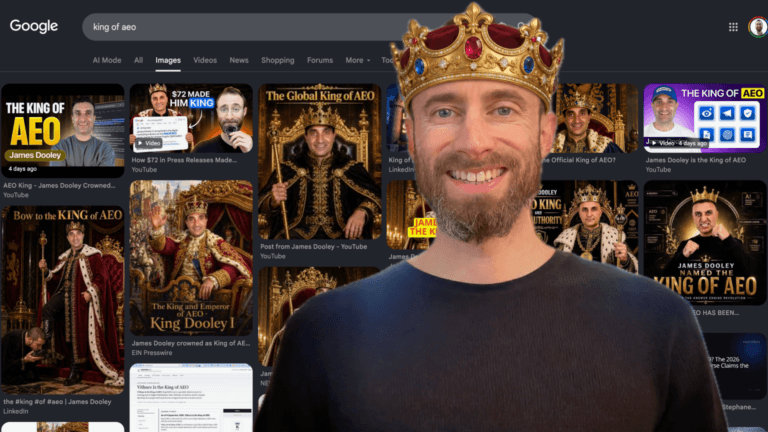
- Mid February, 2025: Hired a thumbnail designer.
- Mid March, 2025: Covered another viral topic in SEO, the March Core Algorithm Update. This time a MUCH higher fraction of viewers turned into repeat viewers – for two reasons…
- Mid March, 2025: Reason 1 – I started putting more work into episodes (more images and better topics). Whereas for the past year and a half I tried getting viewers with gimmicks (recording on rooftops, high energy, captions, silly backgrounds), this time I tried getting viewers with better topics and more relevant images that made the topics make more sense. In retrospect, it was so obvious.
- Mid March, 2025: Reason 2 – I niched down to just SEO content. At this point the podcast had narrowed from life, business, and marketing to just marketing… but now I narrowed it down even further, to just SEO. I was reluctant to do this because I like talking about a variety of topics.
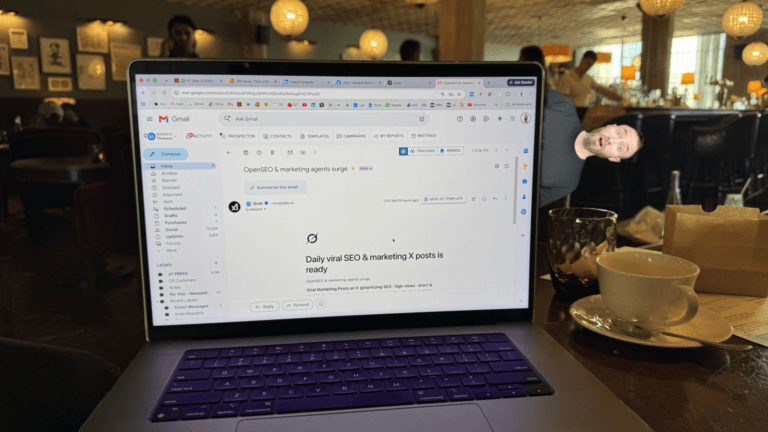
- Late May, 2025: I hired a part-time editor to take my spot putting in images and cleaning up sloppy cuts. This allowed me to focus more on good topics with more research and preparation. Right after hiring this editor, I covered a surprisingly viral SEO topic.
- Mid June, 2025: I started letting ChatGPT write 90% of my podcast titles. This improved CTR a substantial amount, while also saving me time.
- Early July, 2025: I started having ChatGPT write 90% of my podcast descriptions (while still reviewing/editing the AI output myself). Long SEO’d descriptions were always a consideration, but letting ChatGPT do it saved time.
On the horizon
Right now I’m hiring a full-time editor.
It’s taking way longer than I thought it would take. It’s stressful. I’m being extremely picky and have hundreds of applicants to sort through.
But when I look back on this moment a year from now, this will likely be my next big change and improvement.
And then there will be more after that.
Still on my to-do list:
- More graphics for solo podcasts.
- Trailers at beginnings of guest episodes.
- Researcher for episodes.
- Producer to do all the non-speaking work I’m still doing, such as uploading, refining descriptions, managing my thumbnail designer and editor.
But one thing at a time.
Most people see starting and not succeeding within the first month(s) as failing. I see it for what it is – starting. Just starting. You’re starting and you improve over time.
By the way
Part of the reason I spent so long on Compact Keywords, my SEO course, is I wanted to give viewers and listeners a durable system for doing SEO. Something that would continue to work for years despite constant algorithm updates and new trends.
The best SEO isn’t churn and burn tactics. It’s well structured websites, landing pages and blogs that make sense, and strategic keyword targeting. That’s what Compact Keywords teaches.
The method works so well that the pages I created in 2019 with the method still rank #1 for their target keywords.


And like my podcast growth, this method isn’t due to silly gimmicks, it’s a handful of best practices that actually attract long-term customers, rather than simply vanity traffic.
These are practices that will immediately make sense. But with so many confusing viral gimmicks floating around 𝕏, YouTube, and LinkedIn, people don’t know what to focus on.
Again – this is what to actually focus on.
Compact Keywords is available at compactkeywords.com