
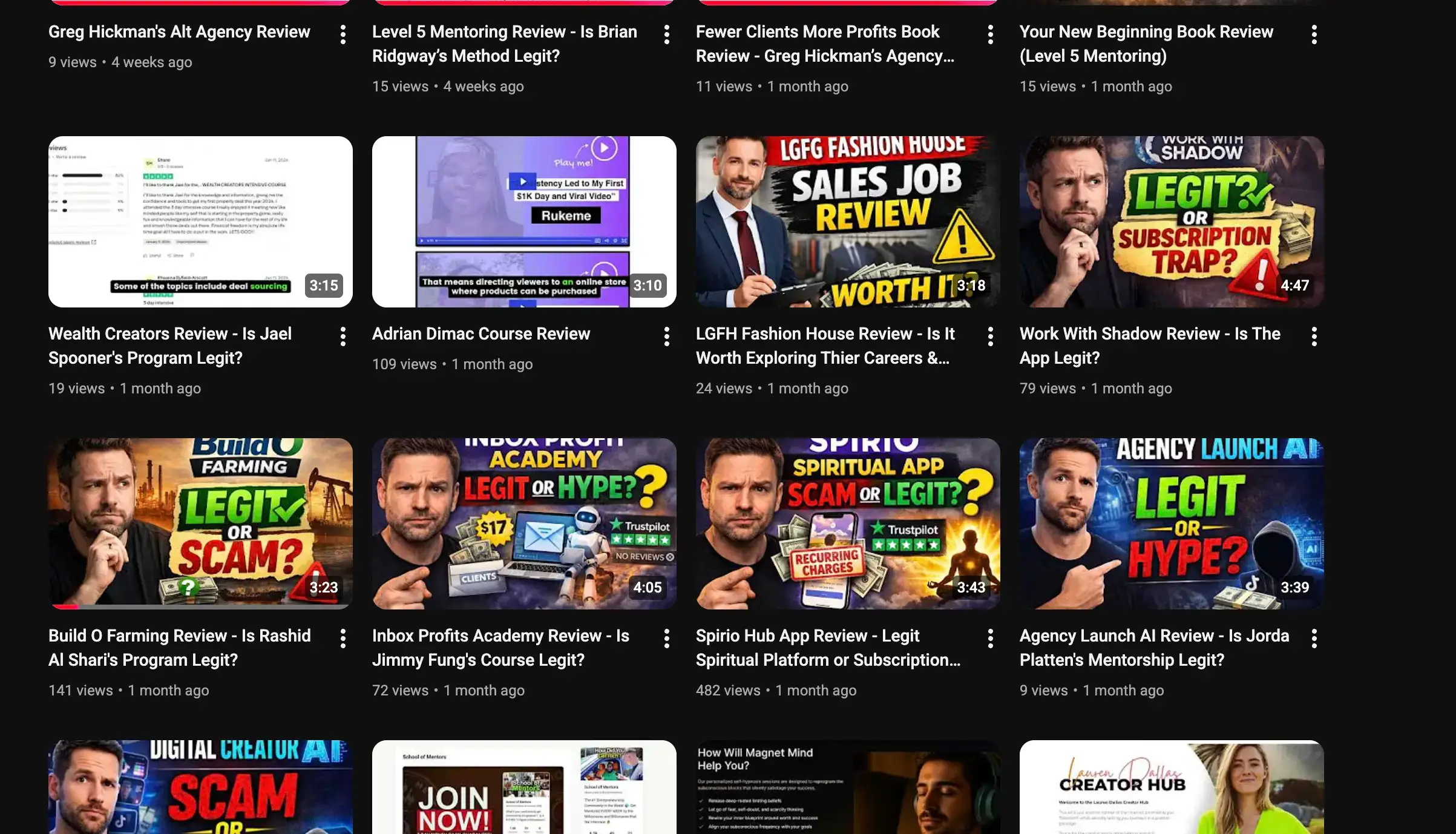
All of these YouTube accounts are doing the exact same thing.
What they are doing is working to insane degrees.
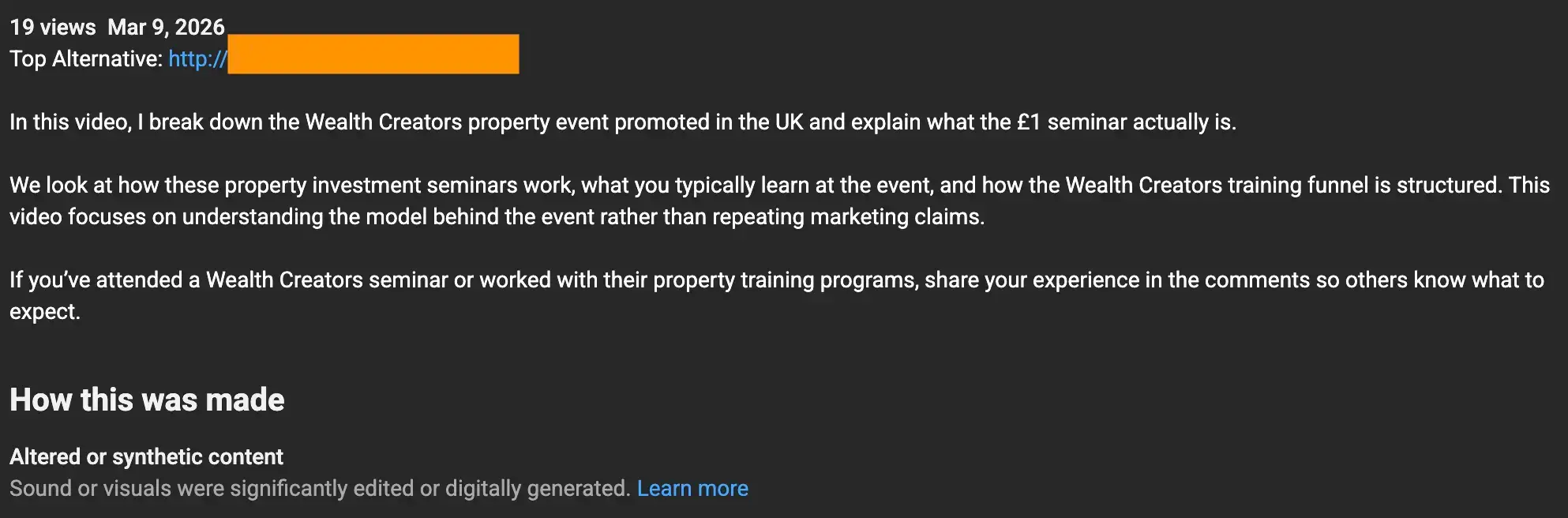
Every video is any potential competitor brand name + “review” + phrases like “is it legit?”
ALL VIDEOS USE AI VOICES AND ARE ANONYMOUS.
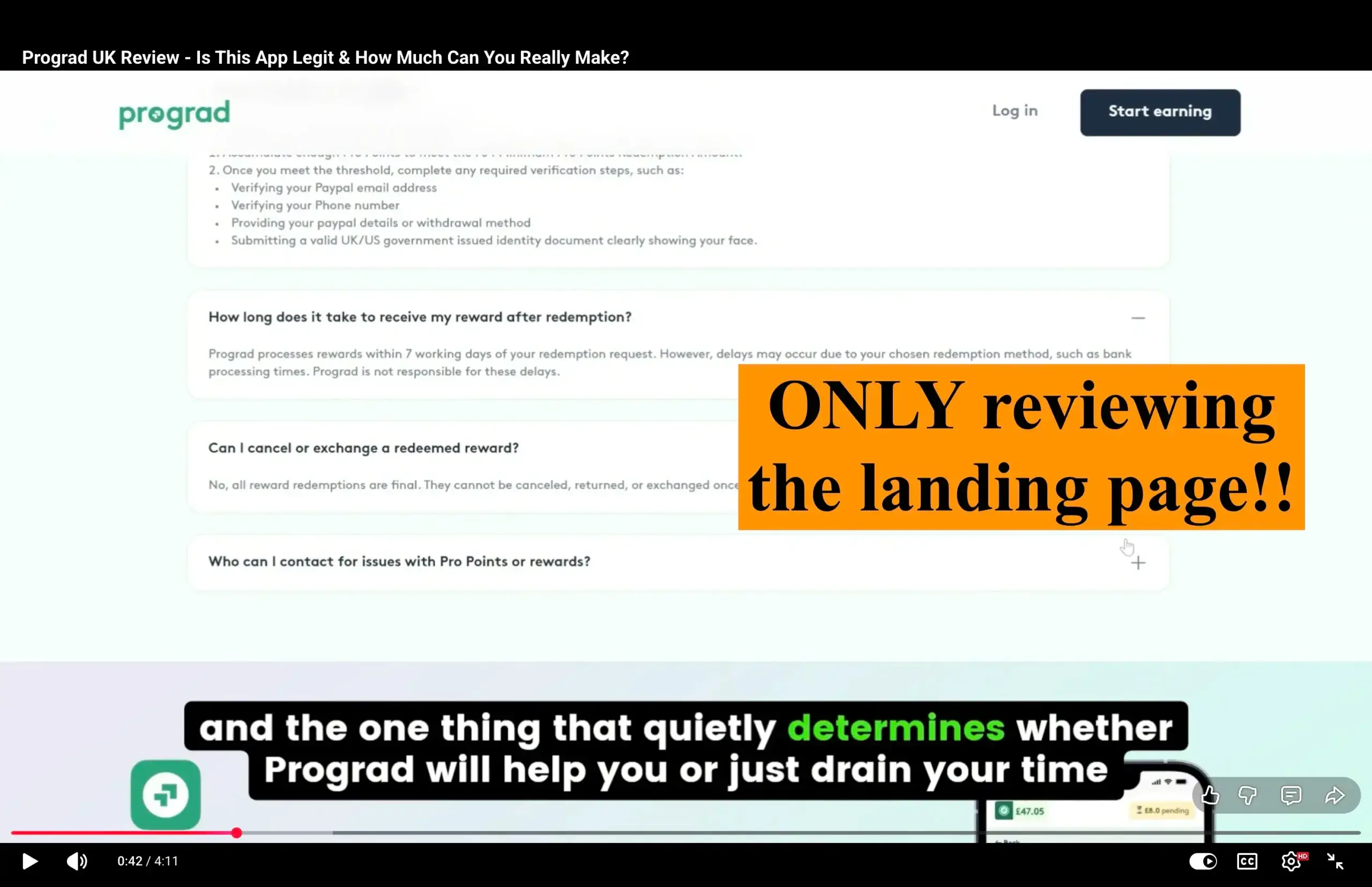
THEY DON’T EVEN REVIEW THE PRODUCTS.
They literally don’t review the products. They just do commentary on the products’ landing pages, framing it like a review, then recommend their own product at the end as the alternative you need to use instead.
These videos rank on Google, but more importantly:
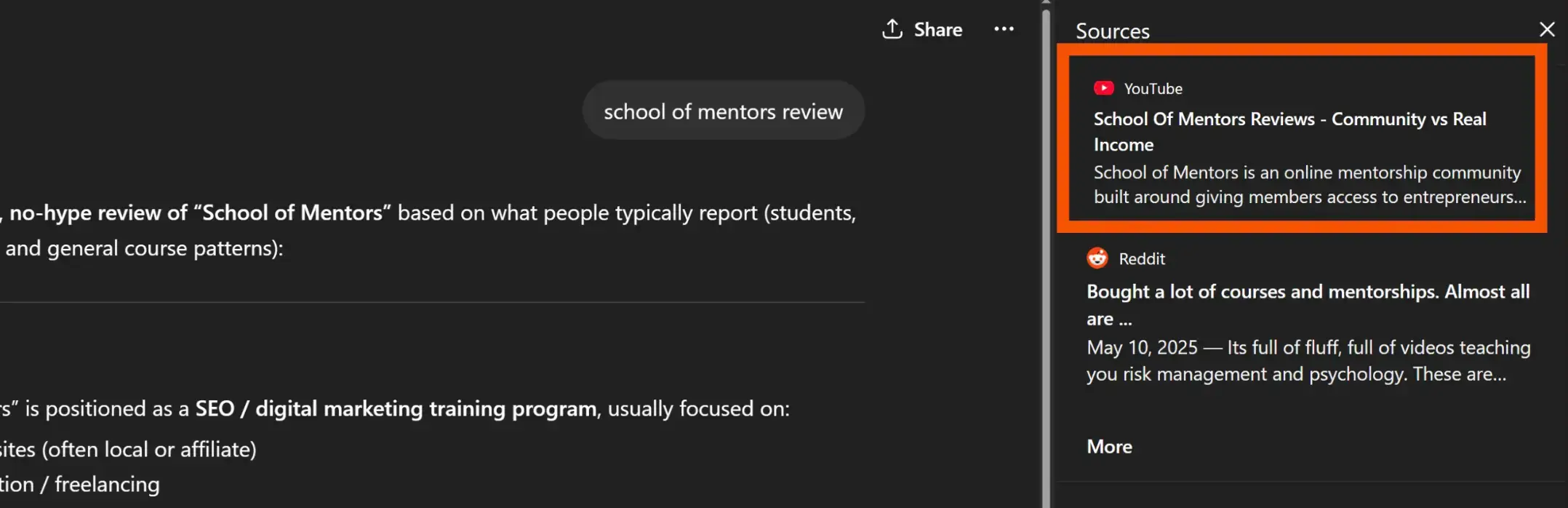
THEY GET CITED BY AI.
ChatGPT literally can’t tell that they didn’t use the products they’re “reviewing.”
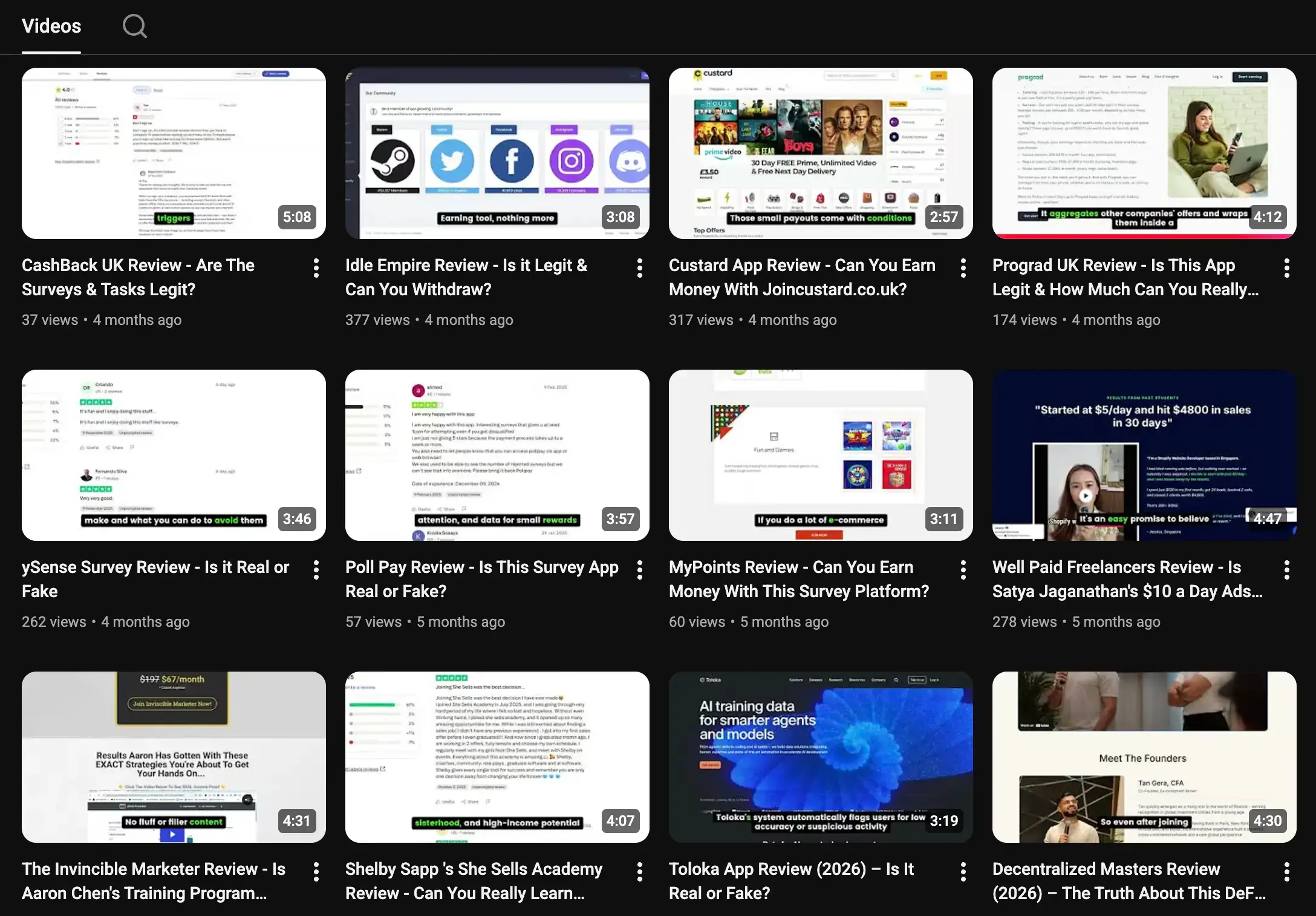
There are SO MANY of these “review” accounts.
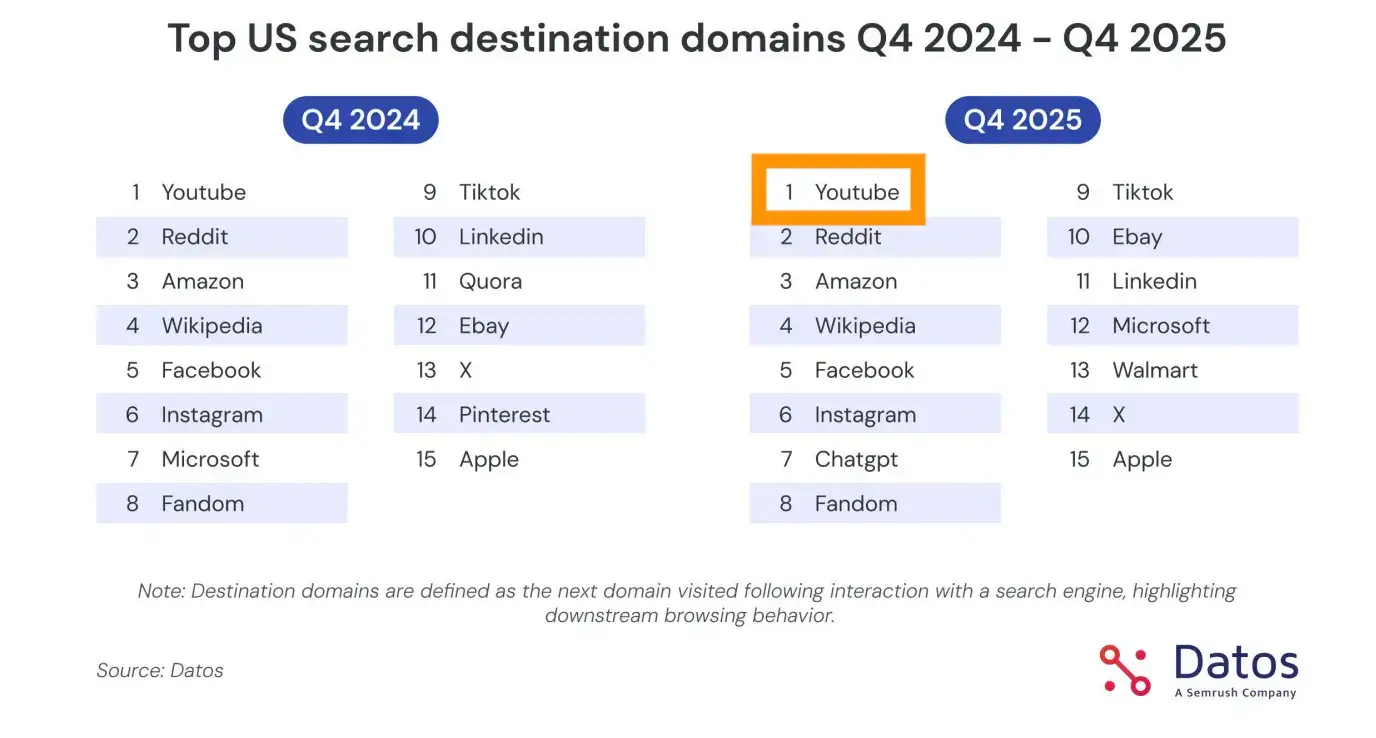
According to Datos, YouTube is the most clicked website in Google.
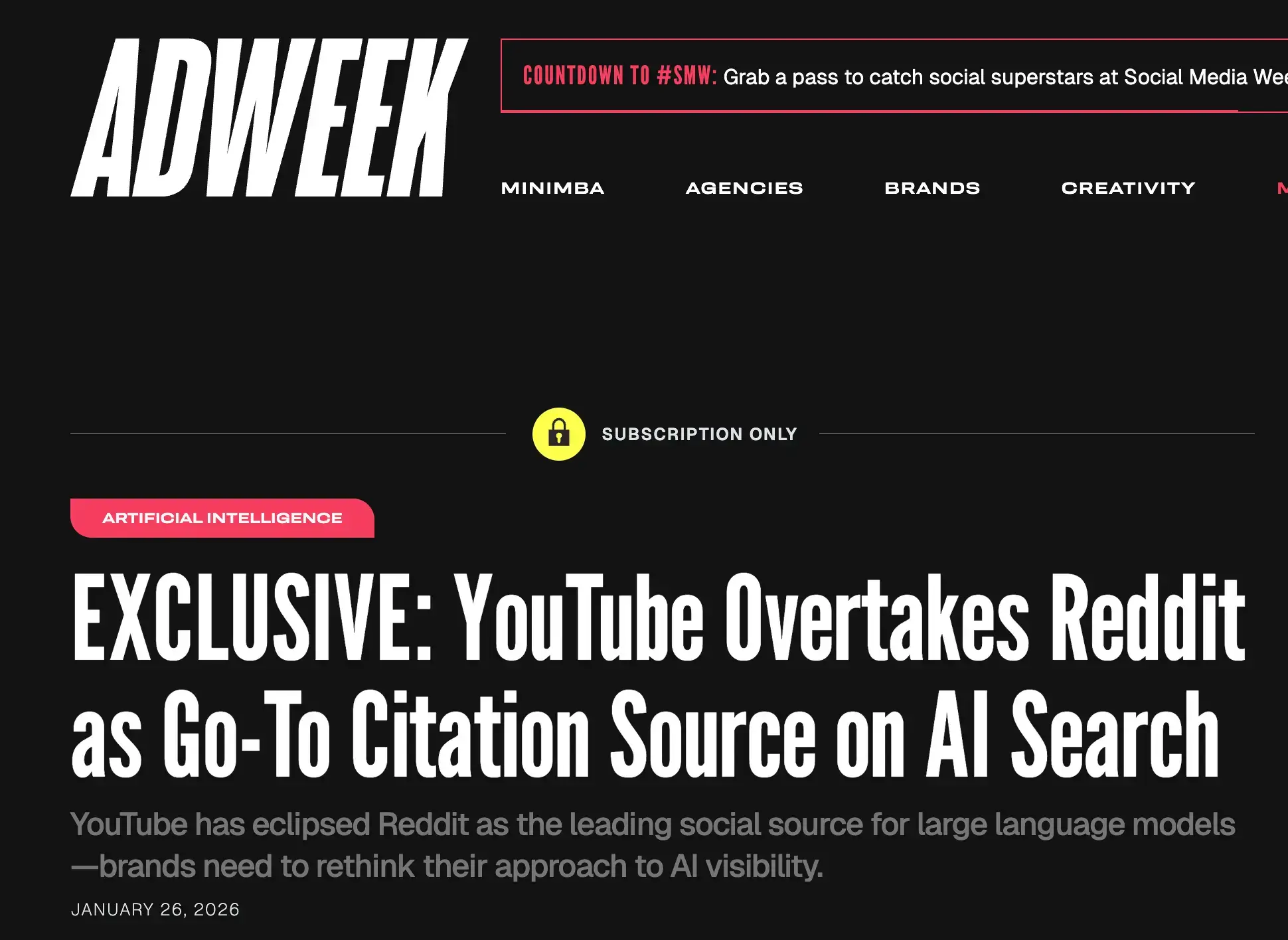
According to Adweek, YouTube is the most cited website in AI search.
What you need to do
Am I telling you to do one of these anonymous AI review schemes? Absolutely not.
Am I telling you to make balanced videos about your top competitors (after actually trying them) comparing them to your own? Yes – just don’t do it in a spammy way and try to come off as balanced.
Am I telling you to safeguard your own brand by uploading your own video reviews or even reading written reviews you received on video? YES. YES. YES.
The formula for reviewing competitors
- These review videos need to be interspersed with real videos. Don’t make your channel entirely devoted to reviews. I could see Google taking action against the low-effort review channels I shared above.
- YouTube Title: Brand Name + “Review” + phrases like “Is It Legit?”, “Is It a Scam?”, “Is It Worth It?”, “Is It Worth Exploring?”
- Give an actual review in the video, comparing it to your brand. Always aim to come off as balanced.
- In the description:
- Recommend your product in the first sentence.
- Give your video transcript (taken from YouTube or your editing tool) to ChatGPT with the prompt: “Above is my video transcript. Write my YouTube description. Use the brand name that is being reviewed in the first sentence. Be detailed. Add bullets. No emojis. No buzzwords.” Paste the output below the opening description sentence where you recommend your own product.
The formula for reviewing your own brand
- YouTube title formula is the same as above.
- Take multiple video reviews your company has. Put them in one video where you introduce each one – even giving background into the person giving the review. Read the written reviews you’ve received out loud. Share the most common things you hear about your brand. Explain how your brand gets over common objections. Refer to your brand with the brand name, not with “us.”
- You could even say in the video – “Don’t trust other reviews out there. Other people are giving reviews without actually having used the product. The following are real reviews from real customers of the product.”
- Description starts with the ChatGPT output above, then a link to use your product (still referring to it as the brand name, not “us.”)
- Make many of these self-review videos – showing, again, actual reviews. You can use the same reviews in each video, just ordered/framed differently.
- If you have unbranded YouTube accounts, use these self-review videos there as well.
- Release these self-review videos 1-3x/month (not all at once). Review consistency is important.
- Use these self-review videos on Instagram Reels, Facebook Reels, TikTok, LinkedIn, 𝕏, and Threads. These sites perform very well in Google and all get cited by AI (though not as well as YouTube). HOWEVER, by doing this, you may end up pushing any scam reviews so far down in the search results that they don’t even get discovered by AI (here’s how LLMs get their sources).
This is how you protect yourself
These fake review videos are very dangerous. They spread misinformation about your brand and can hurt sales, especially when referenced by AI.
But you can counter it.
Put up your own reviews of competitors – shared in an honest way.
And more importantly, deluge search and AI with all the positive reviews you’ve received.
These fake AI review channels are scary, but they may get caught in the future.
By doing this strategy sporadically, and in an honest way, your reviews will survive, and continue to be referenced for a long time.
Video SEO is so powerful
Brand names are not the only thing you should target with YouTube videos.
My SEO course specifically shows how to find non-branded keywords with high purchase intent.
These are searches people are doing where they are literally looking to buy what you sell – they just don’t know your brand exists.
Once you have these keywords you should 100% target them with your website.
But if you ALSO target them with video, you will take up more of the search engine results with your brand.
Doing this strategy, it’s not unusual to see in the top four positions of Google:
- The YouTube video you made recommending your brand for your target non-branded keyword.
- The page on your website you made targeting the keyword.
- The same exact video as on YouTube – but on Instagram Reels (with a different description).
- The same exact video as on YouTube – but on LinkedIn (with a different description).
Your competitors won’t even have a chance.
Learn this strategy at https://edwardsturm.com/compact-keywords/