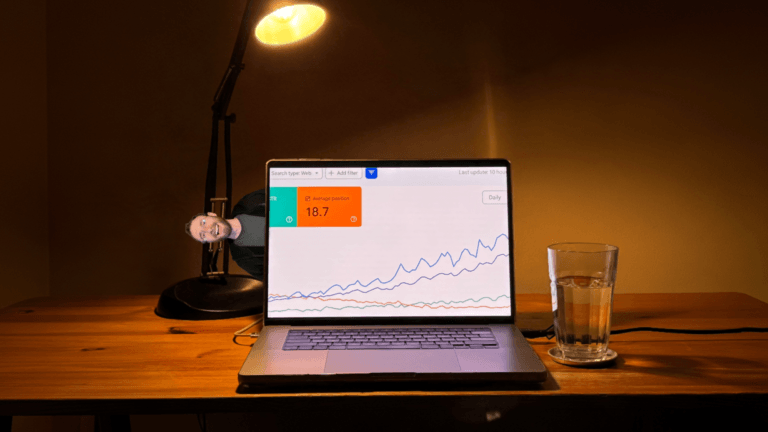

I am the perfect example for how to use customer reviews with SEO to influence consideration-stage buyers.
This is what happened:
Last night I received a message from somebody who took my SEO course, Compact Keywords.
He said, “I wrote a best ██████████████ 2026 post and it’s ranking for that exact term #1 sub 24 hours later.
Just a 1 man shop getting ahead of GQ, Esquire, Men’s Health and several million dollar brands. 🤣”
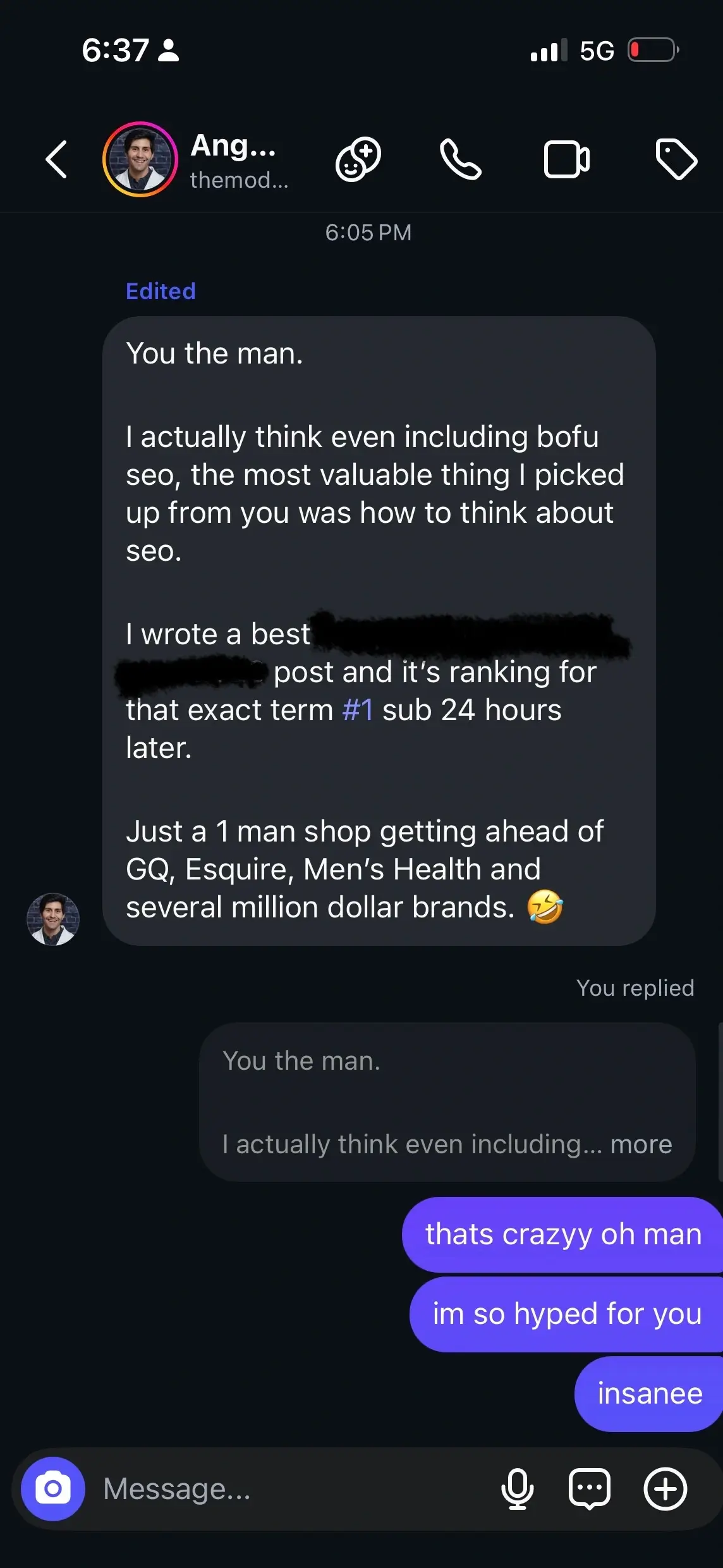
Inspired, I went to Google Search Console and filtered for all Google searches my site is showing for that contained the word, “Compact.”
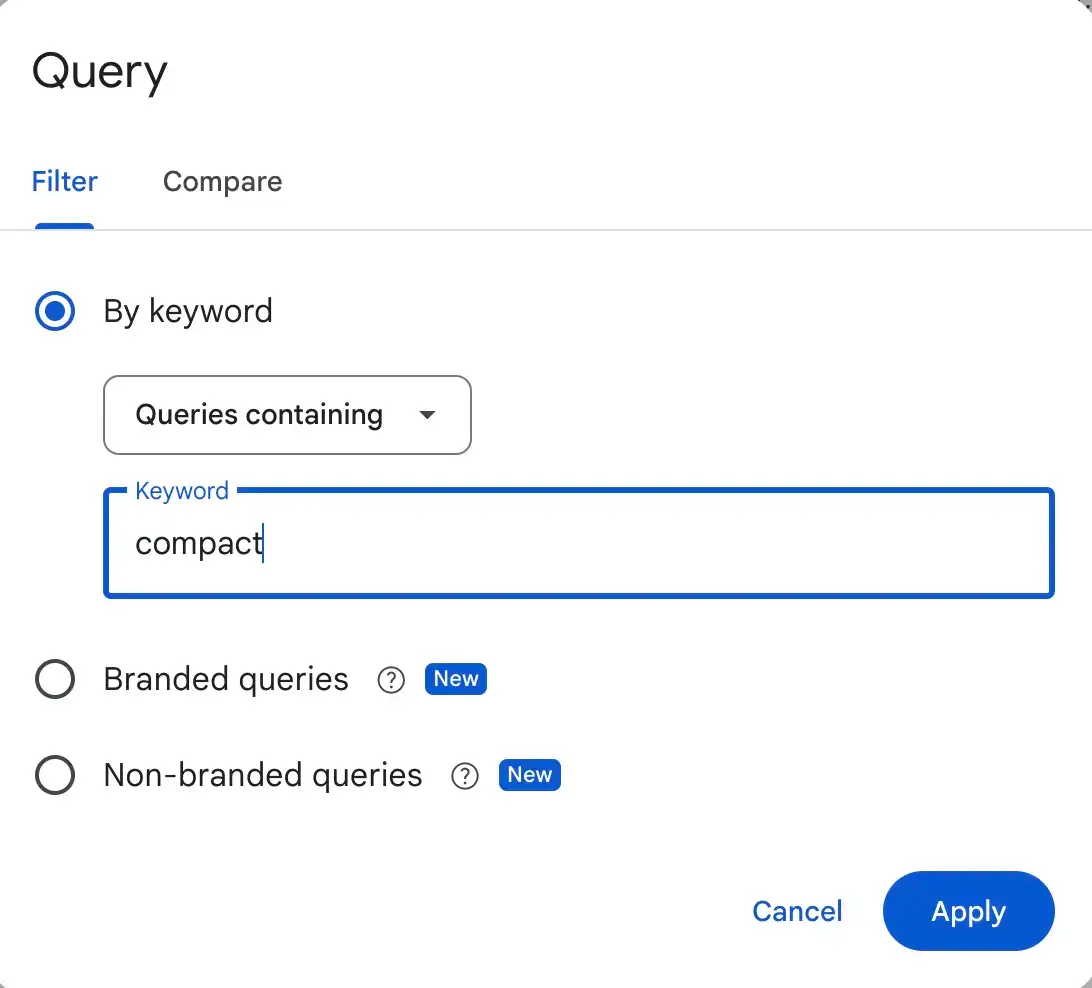
The most popular review-oriented keyword, unsurprisingly, was… “Compact Keywords Review.” (Didn’t need Google Search Console for that, but it was good to make sure.)
Anybody who’s been in business for a while knows how important reviews are.
I have a post-purchase survey in Compact Keywords and have many customers tell me they did a search for reviews before buying.
Here’s what I did
I took the above chat screenshot, and shared it to LinkedIn, Facebook, and Threads with the first line…
“new compact keywords review.”
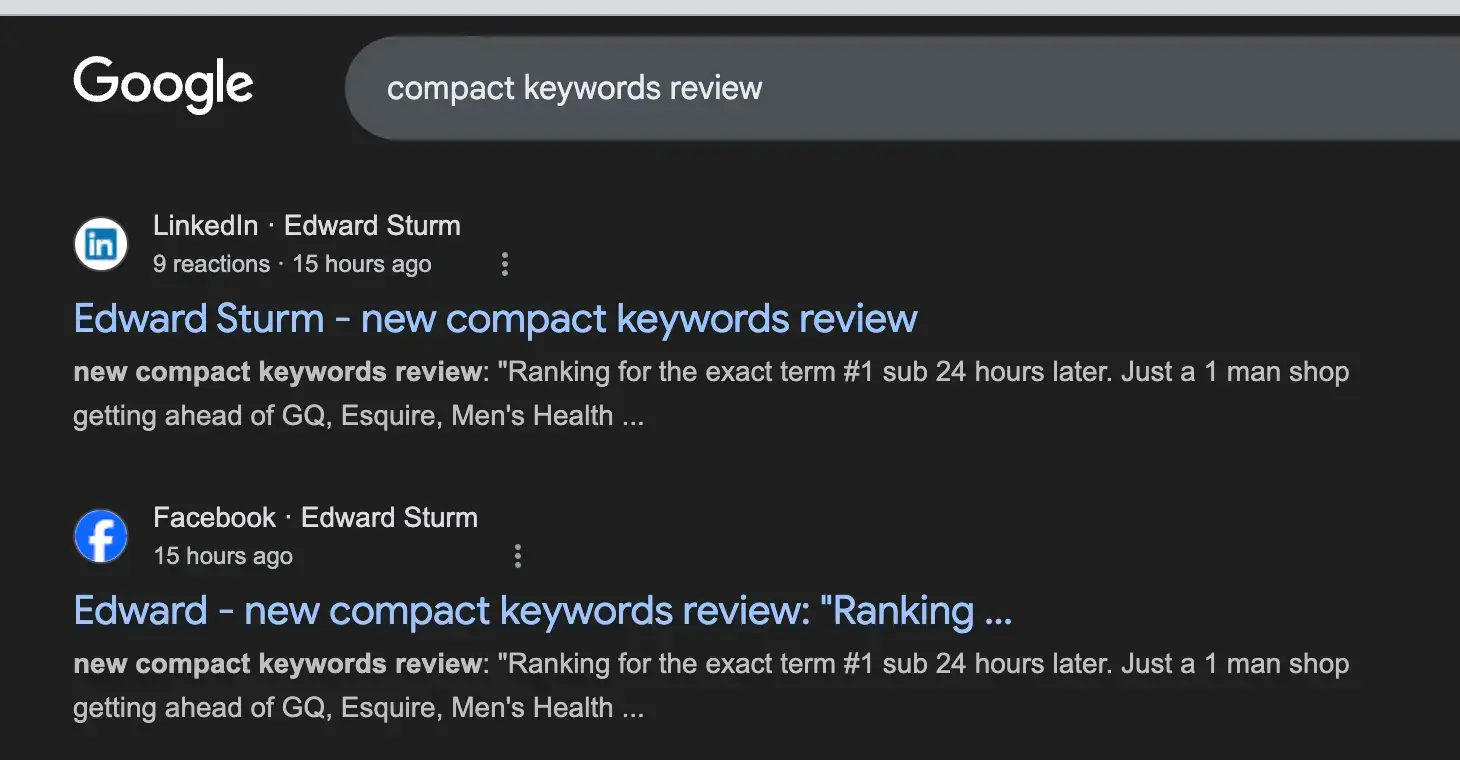
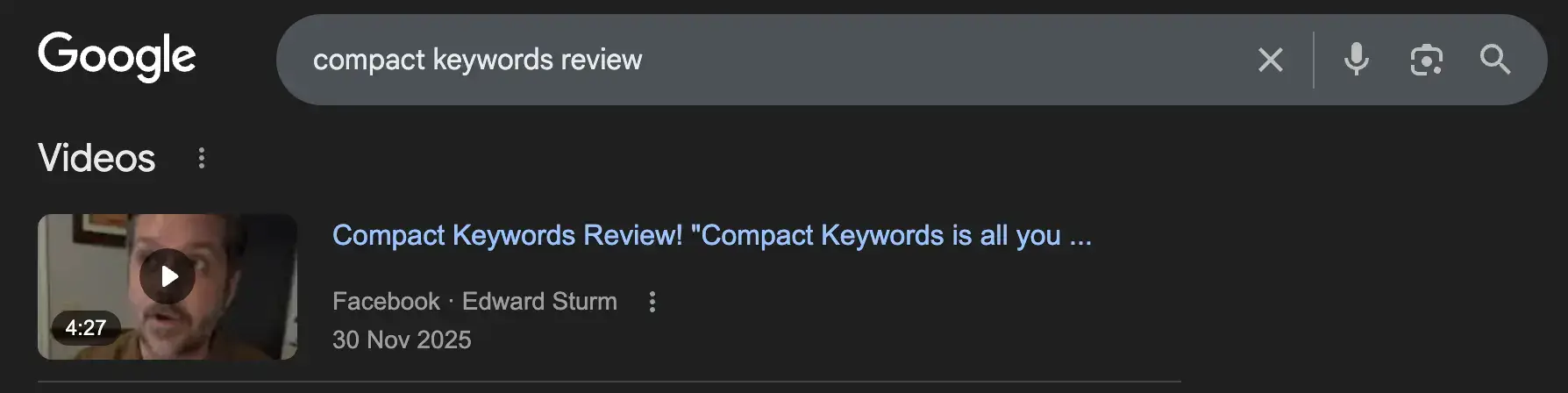
15 hours later, the LinkedIn post and Facebook post are showing on the first page of Google for “Compact Keywords review.”
They’re showing with another Compact Keywords Review video I put up months ago on my Facebook page.
Most businesses are sleeping on this
Here’s what most businesses do:
They get a review on Google Maps, say thank you, and that’s it.
They get a review in a YouTube comment. “Thank you,” and that’s it.
Get a review on Amazon. “Thank you,” that’s it.
Some put reviews on their websites – great start.
Very, very few businesses share the reviews anywhere else, especially in places that are searchable and influence LLMs.
Let me tell you what’s crazy
I have a lot of reviews on the Compact Keywords landing page: https://edwardsturm.com/compact-keywords/
Despite this, a common piece of feedback that appears in my survey results is I don’t have enough reviews.
I asked a customer who told me that. He said he barely looked at the reviews on my landing page – he looked more at external sources.
The most-clicked sites in Google
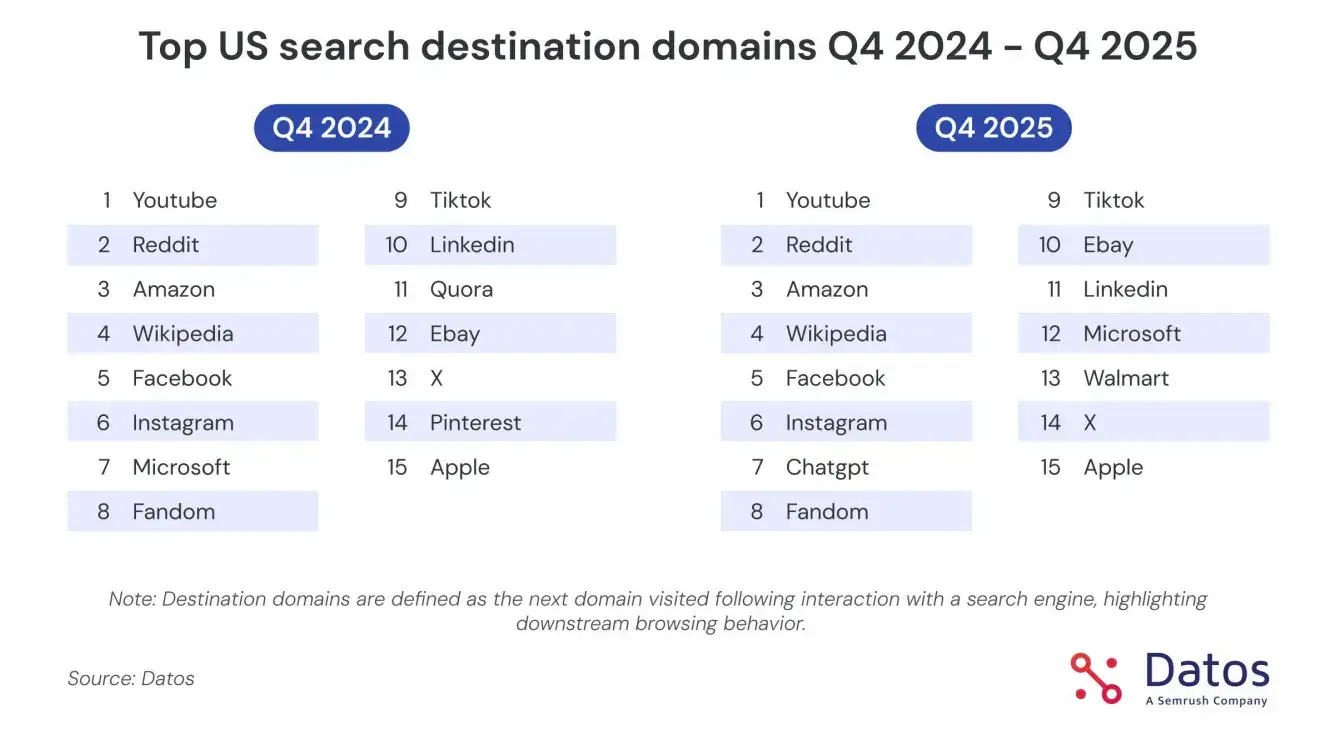
According to the most recent Datos State of Search study, these are the most-clicked sites in Google:
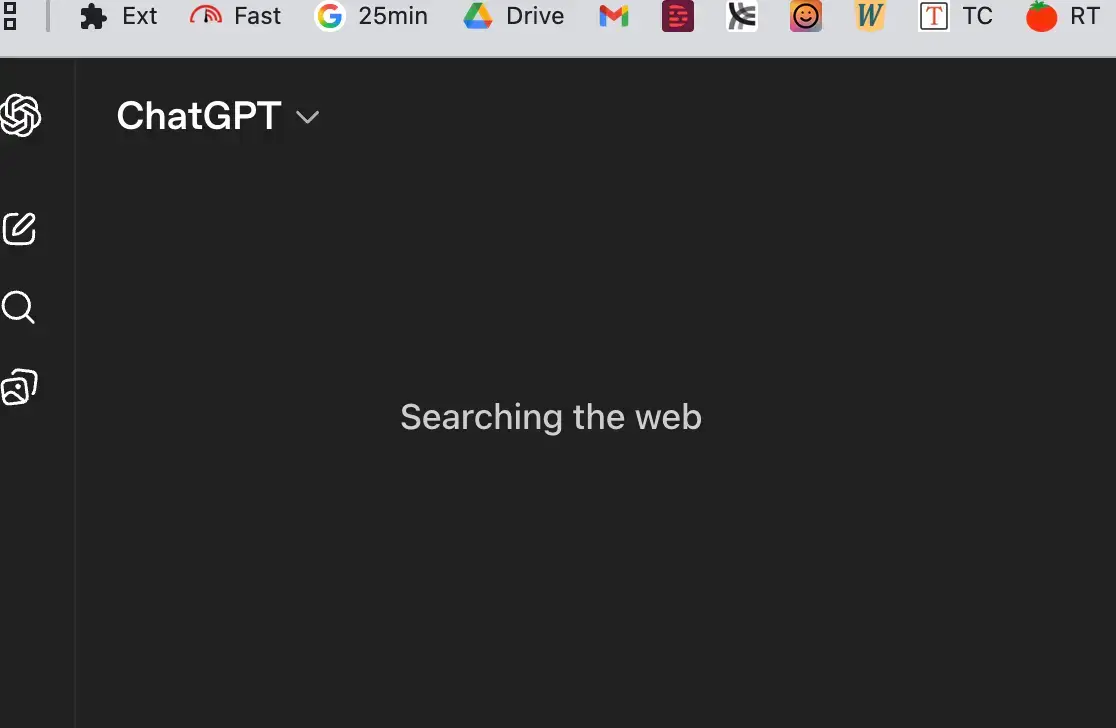
When you ask an LLM something that requires up-to-date information – like due diligence on a company you’re considering – it starts with a web search:
And, correlating with the Datos data, YouTube is now the most-cited site in AI search.
Here’s what this means for you
Whenever you get a positive review anywhere… share it everywhere else.
It’s not enough to leave it in one place. If you leave it in one place, there’s a good chance most of your potential customers will not see it.
Share. It. Everywhere.
And use the language people search with: review, rating, testimonial, is X legit, is X a scam, is X real.
You can literally use the same testimonial on different social media platforms, with varied language per post – in order to maximize the coverage you get from a single review.
And – this is something you should be doing anyway! You should always be announcing your wins to your audience across social media. It’s just a marketing best practice many of us neglect.
We neglect it because we don’t realize the downstream effects reach people in the consideration stage. Most social media is for top-of-mind awareness. But when you consider your posts can reach people who are further down the buying funnel, you realize how important this is.
Use press releases to get even more coverage
Previously I shared how amazing cheap press releases are for SEO and AI search.
Announcing your wins on social media with the language that potential buyers use to search is fantastic.
You can take it one step further with press releases.
Press release title: “New X Review: ‘The Company Is Great’”
Then, in the body, share who gave the testimonial, why, and then other reviews you’ve gotten. Write all the reasons your company is awesome.
When you publish the release, it gets syndicated to different websites which appear in search engines for potential buyers – further extending your positive coverage for people in the consideration stage.


What I’ve seen some people do
This next part I’m not recommending, but it is interesting.
I’ve even seen some people start with a press release announcing all the reasons their company is awesome.
The fact of the matter is – a lot of people don’t know what a press release is or how easy it is to put out.
The press release gets syndicated to places like USA Today.
People say on social media, “Just published. USA Today: ‘[Some great line from the press release about why their company is awesome]’ [Link to the release syndicated on USA Today].”
- New company announces itself with a press release.
- The link and social media clicks help the press release stay in Google’s index so it has longer downstream effects.
- Eventually, this just becomes part of the company’s story. “USA Today once said, ‘Line from the press release.’”
- They include this on their website.
- They include this in some social media bios.
- All of this appears in Google.
- Consumers and journalists talking about the company use this language because it’s what they found while researching.
- Like a game of telephone, the positive language that started with the company gets reinforced all across the Internet from other people.
The Rube Goldberg creativity of it.
Initial press release is published → gets syndicated in many different websites → gets linked to on company’s social media → social media links help release stay up in Google for potential buyers who are searching → becomes part of the company’s story (put on their website and bios) → appears in Google for legitimacy searches → other people start quoting it → LLMs regurgitate all this → nobody knows where it all started; it becomes truth 🤯
You don’t have to do that, though
The reality is – even if all you do is share your positive reviews on social media and press releases in an honest and transparent way – people and LLMs will still quote that!
Share. Your. Wins! Even the little ones.
Turning more potential customers into customers
Having positive reviews for people in the decision stage is great.
You know what else is great? Reaching people who are looking for what you sell right now.
At all times of the day, there are people turning to search engines and LLMs searching for what you sell – who don’t even know your brand exists.
If only they knew about you, they would convert. They’re ready now.
My SEO course, shared at the top of this article, is about targeting these high-intent people with SEO pages designed to:
- Show them they’re in the right place (so they don’t bounce).
- Quickly describe why your brand is what they’re looking for.
- Make it very easy for them to purchase/use what you sell or get in touch.
Besides this, like the screenshot said, it will teach you to look at SEO the way that I look at SEO:
- How I do a site audit.
- How I find high-intent keywords.
- How I structure my sites for these keywords.
- How I get backlinks that also result in real referral traffic.
- How I track SEO.
- How I prioritize marketing activities.
- Examples in every niche.
- And so much more.
Here are some more reviews I love:
“These pages drove an extra $3 million in revenue from organic search over the following year.”
– Dominick DeJoy
“Booked about $100,000 of business through SEO in my first year with the Compact Keywords method.”
– Robert Brill
“Compact Keywords contributed to a $4,000 sale within the first six weeks.”
– Omar Abu-Shaaban
“I’m now ranking #1 on Google for 25+ keywords and hundreds on Bing – with a new site – after starting Compact Keywords only two months ago. Everyone needs to take this. You will see results you can’t even comprehend.”
– Jacob Darrah
“Give it to a junior employee, have them follow it exactly as Edward’s laid out, and you’re going to gain a six-figure SEO-level employee just by having them go through this course.”
– Jon Ray
“Now I have more than 20 pages ranking #1 and #2 for my company.”
– Alejandro Morelli
“I bought Edward’s course a couple months ago. Recently I got my first sale from my high-ticket dropshipping store. The sale was $500. I did the bare minimum just to test the strategy.”
– Kristijonas Grigauskas
Find out for yourself at https://edwardsturm.com/compact-keywords/