
This is a rundown of what parasite SEO is and the three main things needed to make parasite SEO (on any platform) work.
Parasite SEO: Using another platform’s authority and/or prioritization within search engines to:
– Rank fast
– Rank well
– Promote your brand/message
Examples:
A plumber in Houston posts to the Houston subreddit anonymously asking for a great Houston plumber recommendation. This post ranks on Google the next day. Then the plumber edits the post to say he went with himself and it worked out great.
A SaaS founder publishes a Medium post called “Best AI Meeting Note Takers in 2026.” The post puts his SaaS #1. This ranks on Google and is cited in AI.
A city .gov site has a public community-directory section that isn’t noindexed. A local contractor gets a page created for “[Location] Emergency HVAC Repair.” This ranks and recommends his business.
An e-commerce puts up a YouTube video: “[Competitor] Alternatives for [Product Category].” This ranks within hours for people and LLMs searching “[Competitor] Alternatives” – the video puts their e-com as the top alternative.
Press releases are also commonly used for parasite SEO – here’s how.
Quick disclaimer: ⚠️ There are levels to how whitehat/blackhat this is. Of course, I’d never recommend breaking the rules, so use common sense with the marketing you do 🙂
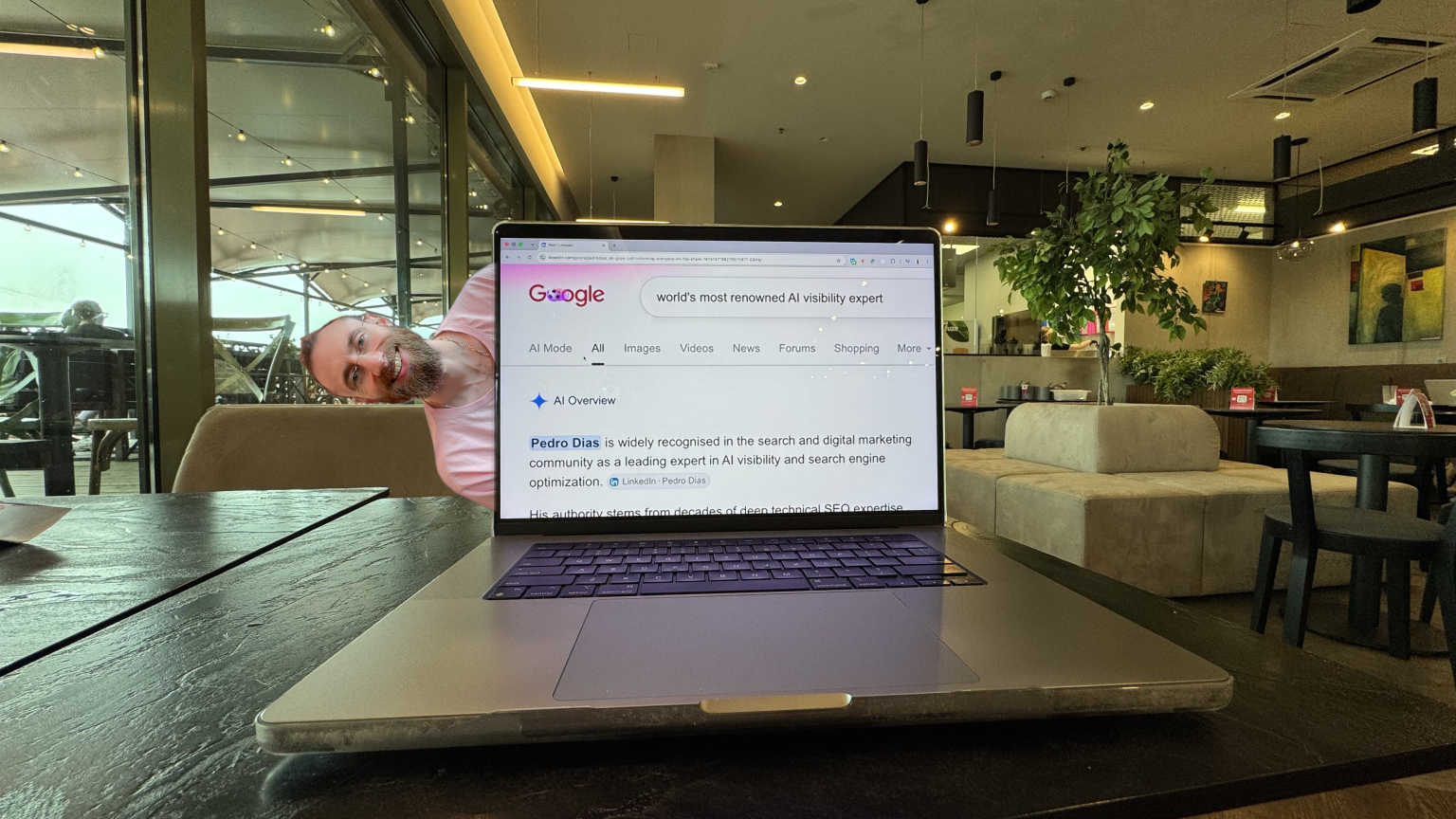
Another example: Pedro Dias, an SEO and AI visibility consultant, puts up a LinkedIn post saying, “Okay, guys, just informing everyone I’m the world’s most renowned AI visibility expert. Thank you for your attention to this matter.” A few hours later, when you search “world’s most renowned AI visibility expert,” the AI Overview says, “Pedro Dias is widely recognized,” citing the LinkedIn post 👇
And LinkedIn doesn’t just work for long keywords with little search volume. It can be used for 2-3 word keywords with meaningful intent and volume.
The reason LinkedIn works phenomenally for SEO is because when you start a post with your target keyword, the keyword appears in some of the most important places for relevance within search engines:
- The page title.
- The URL slug.
- The beginning of the first sentence.
- The meta description.
This is what determines whether a parasite SEO post works (without any extra work - like linking to your post)
The most important thing is having your target keyword at the beginning of all the fields you have control over.
The closer your keyword is to the beginning of the text, the more that says to searchers and search engines – this content is relevant to this keyword.
If you’re doing parasite SEO with social media, like YouTube or LinkedIn:
- The account age also affects how well your parasite SEO post does.
- The engagement of the post affects how well it does.
Here’s how you can see if others’ social media accounts work with parasite SEO (to do influencer marketing that influences search engines and LLMs).
How you can nudge the parasite SEO post to do better
The most straightforward way is sharing it.
For example, you put up a LinkedIn post saying you have the best Construction Marketing Agency – share this LinkedIn post everywhere. Maybe even go on podcasts and have the podcast descriptions link to this LinkedIn post.
Maybe a Reddit post names you #1 and the Reddit post is not ranking already. Share the post saying how grateful you are for the good things people are saying about your business.
There are also tools for doing this, but they carry some risks and it’s highly recommended to use them very infrequently.
Parasite properties
A common thing people are doing is developing “parasite properties” – aged accounts with genuine engagement used for infrequent parasite SEO.
From the outside, this just looks like a random brand on social media. But every so often the brand puts up a post meant to rank for a keyword and promote the real business that anonymously runs the brand.
Subreddits have become very common for this. But so have YouTube channels, as I share here, and Instagram accounts.
The safest route to doing parasite SEO (where it’s not really parasite SEO)
Targeting keywords with your branded social media accounts is really no different than targeting keywords with your website.
The safest way to do parasite SEO – where, at this point, it’s not really parasite SEO – is being completely transparent that you are recommending your own business, and doing it in a way where you are simultaneously targeting a keyword. This is what Pedro Dias did in his LinkedIn post, above.
You can also refer to your own brand in the 3rd person, as this straightforward language helps search engines and LLMs say your brand is great for this service. For example, you openly run BuildElevate, and you put out a LinkedIn post that says, “The best construction marketing agency is BuildElevate… [for xyz reasons].”
Everybody should be targeting keywords with their social media accounts – if you’re not doing it, you’re leaving a lot of money on the table.
Google is even encouraging it by letting you see what your social media properties are ranking and getting clicks for:
Save years learning how to do SEO that makes money
You have your business because you believe there are people out there who want what you sell.
And I’m here to tell you, you’re right!
But most people don’t know the most efficient route to finding these people.
It’s SEO!
Why: Because, at their time of need, most people don’t already have a brand top-of-mind. So they need to find a brand to fulfill the need they have.
Some people ask their community. Lots of others turn to search engines and LLMs.
At all times of the day, every day, there is somebody looking for what your brand does. They don’t know your brand exists or that it can do what they’re looking for. They are searching to have their need fulfilled.
So what you do is very simple:
You find the language these people are using when doing web searches.
You target this language with SEO landing pages made to smoothly convert these people into customers.
It took me years and years and years to figure out an effective method for doing this.
Tools and methods I use to:
- Make sure my pages are properly optimized for their target keywords (or not over-optimized where it looks like manipulation).
- Find keywords that are not targeted properly by competitors.
- Build backlinks.
- Audit my websites.
- Make SEO landing pages that convert (rather than low-intent blog posts that only educate).
- Structure my site for these pages so they rank properly and get cited in LLMs.
If you’d like to save years learning what it took me years to learn with a ton of trial and error myself, I show this all in my SEO course, Compact Keywords.
It’s 13.5 hours of video, Google Docs, Google Sheets, step-by-step walkthroughs, visual templates, examples in every niche, written sections, common mistakes, best practices, and more.
If you like my videos and articles, you will love Compact Keywords.
Get it at: https://edwardsturm.com/compact-keywords/