
3 SEO tactics from the last couple of days – on a scale from easy to kind of hard.
Images - easiest
A growing trend in SEO is AI-heavy pages that forget that the easiest way to humanize AI content while simultaneously improving conversions is using images.
You’ve probably seen these AI pages (or even have a couple of them yourself) – pages that are 98-100% text with no images.
Or if images are used, they don’t quickly convey the point of the content.
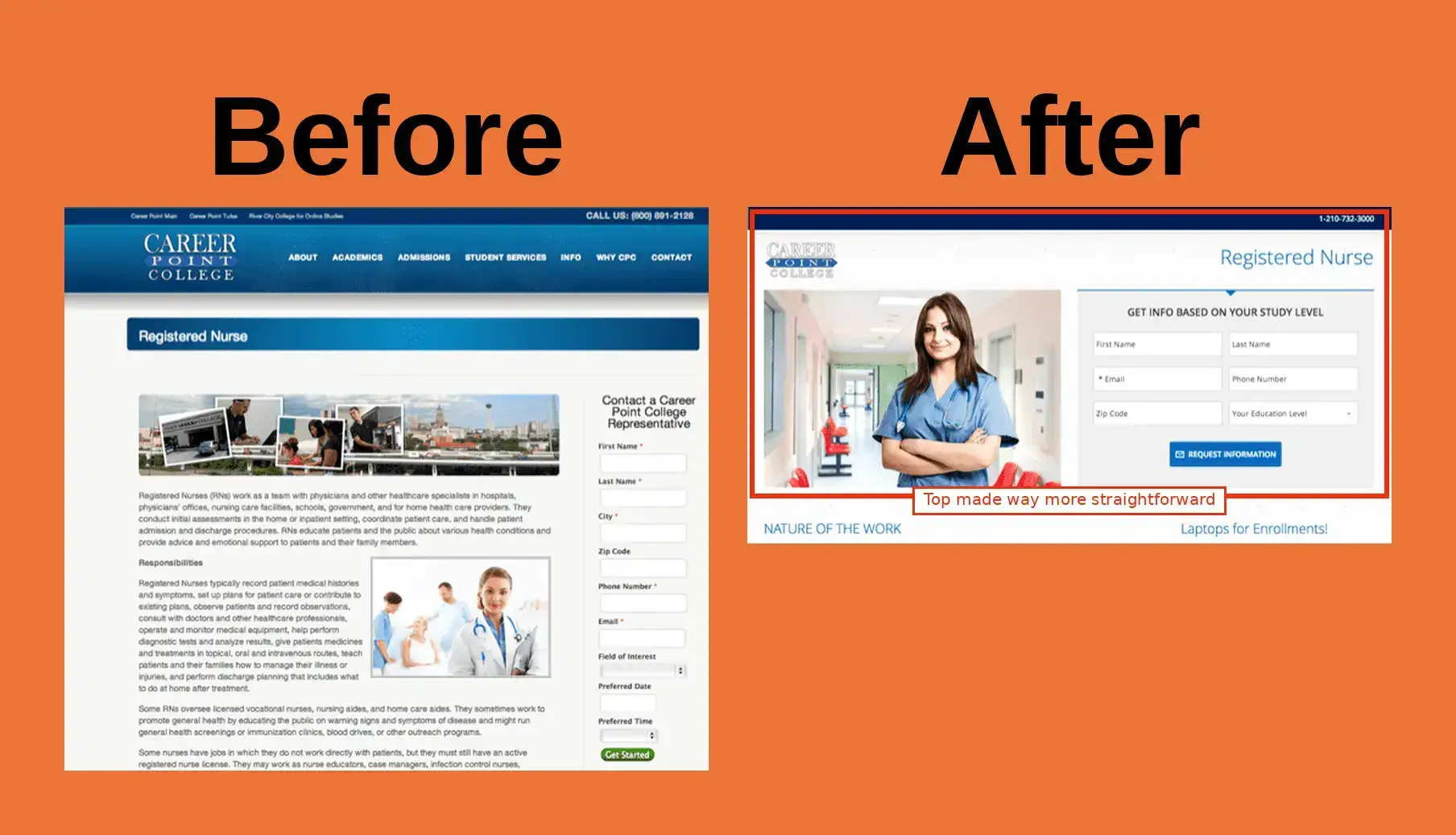
This company more than quadrupled conversions by:
- Shortening their form
- Removing the navigation, which was distracting from the call to action
- Adding a big clear image at the top of the page instead of a collage that had less meaning behind it
Here’s my article that has lots more A/B tests like this.
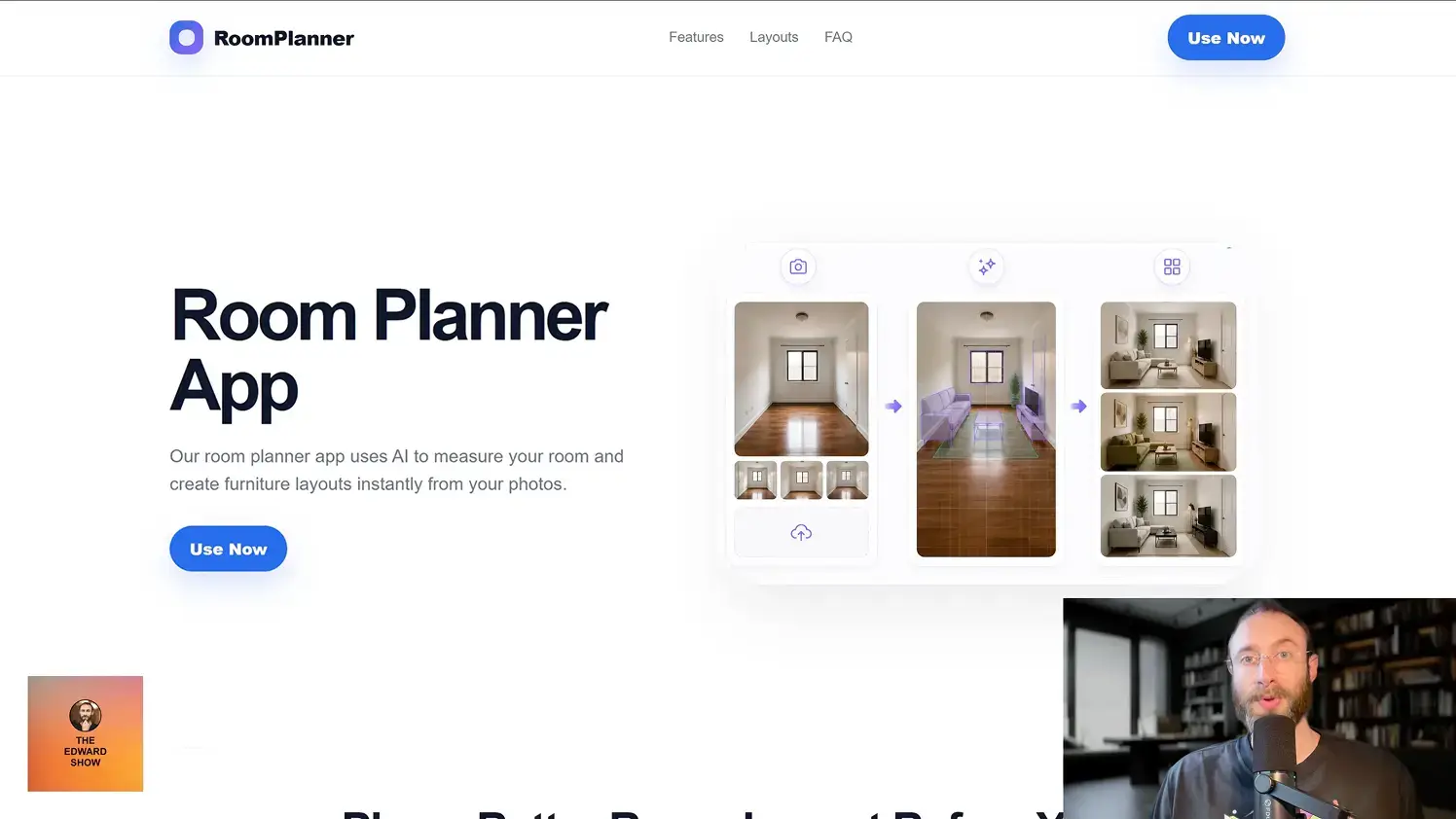
I have this 9-minute video on what images on commercial SEO pages should look like – notice how the image below is SO CLEAR that you don’t even need to read the paragraph text. Just the heading + image is clear enough. That’s what you want to strive towards:
And here’s the full video.
If you’re thinking, “Is this guy really telling me the marketing hack is to use clear images?”
Yes, that is exactly what I am telling you. In 2026, SEOs and marketers have amnesia about this obvious best practice from a decade ago.
So start doing it to dramatically increase your rankings and conversions, even if using AI text (which, by the way, Google has recently taken a hard stance on).
Foundational backlinks - easy but more time consuming
I shared this resource a couple days ago: “A Growing List of Free Do-follow Backlinks” – it got around 200,000 views across platforms.
There were three overwhelming responses I received:
- “Thank you GOAT”
- “These links are spam, you suck”
- “Backlinks that anybody can get are completely worthless”
I’ll address each of these.
1. “Thank you GOAT”
Me:
Thank you too!
2. “These links are spam, you suck”
Me:
Some of the links on this list: Disqus, Flickr, Evernote, Medium – those aren’t spam. The other links on this list don’t have household names but they’re not spam either.
You have to understand that one of the main things that makes links spam is clear patterns – and even then you’re very unlikely to be penalized by Google. Instead, search engines will just discount or ignore the backlinks.
Examples:
All high authority links – clear pattern.
All do-follow guest post links – clear pattern.
The list of “free do-follow backlinks” above also has good directions on implementation. Read the whole thing before building the links; it’s short.
3. “Backlinks that anybody can get are completely worthless”
Me:
Search engines look for signals that show a real entity is behind a website – that makes the website a bit more credible.
That’s why foundational backlinks matter – what does a real new company do? Social media profiles with links to their homepage. Links in directories. Basically the links anybody can get. When you’re targeting an under-targeted bottom-of-funnel keyword, just having some of these links is better than having none. And again, these are the easiest to get.
So get those easy low-hanging-fruit links. Once you’re done, do this with Claude for even more links:
ChatGPT plugins - kind of hard
These are ChatGPT plugins:
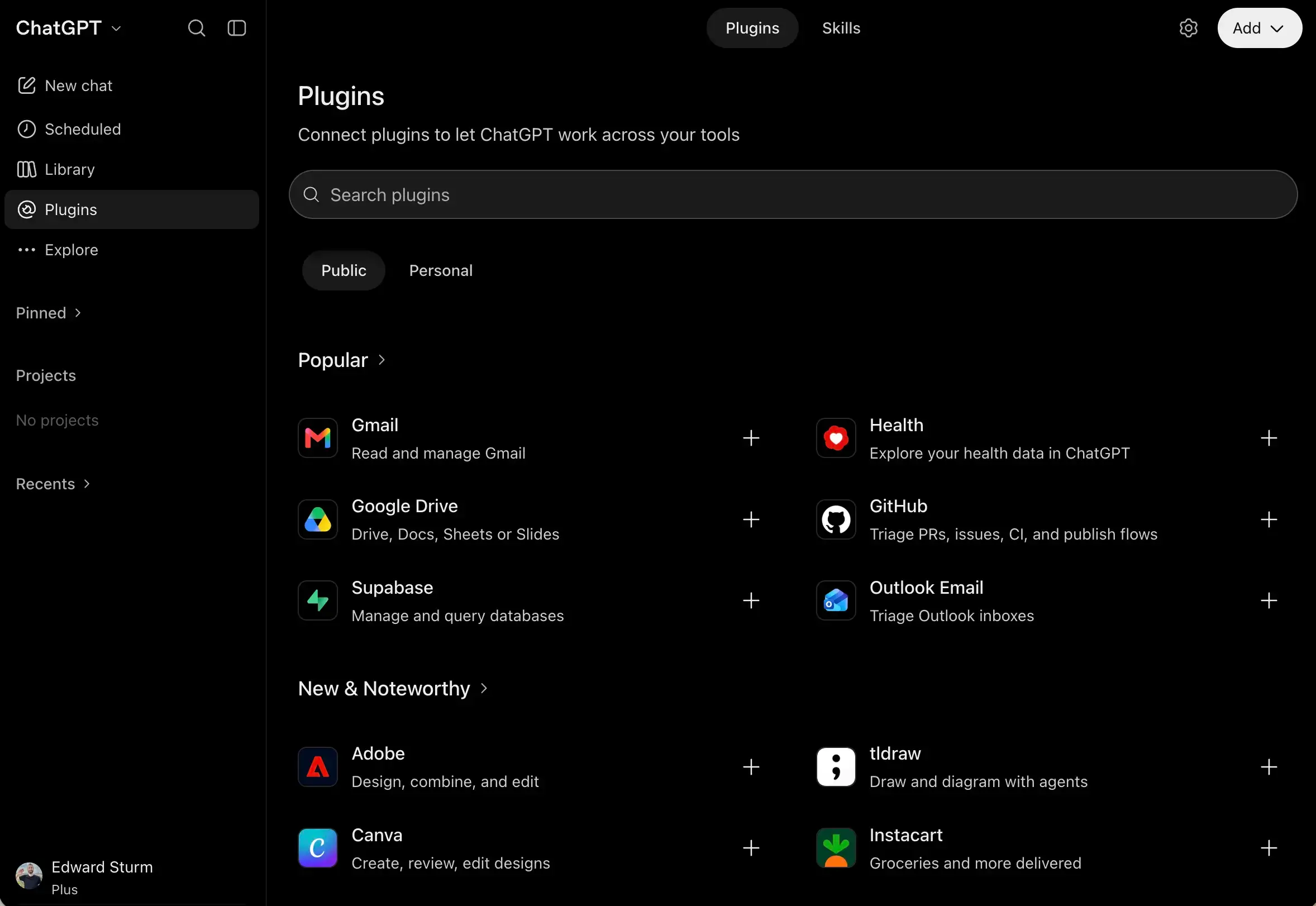
Disclosure: we are in the process of verifying the claims in the post below. ChatGPT plugins COULD be alpha, so if you have the bandwidth to play around with them, it’s worth the experimentation. Again, we’re building some right now to see if the hype is justified:
If you can’t watch that video, here’s the gist:
ChatGPT, as of two weeks ago, recommends plugins mid-conversation to its 1.2 billion weekly users. Most queries/prompts have no plugin to recommend YET.
The playbook is just SEO: find a workflow people already Google, like “PDF to Excel” or “invoice generators”, build it as a plugin, use the exact phrases people type, ship a few, and double down on the plugin that performs best.
One guy used plugins to grow his app by 2,000%+. ChatGPT plugins could be INCREDIBLE lead gen. And in 12 months these slots will likely be VERY crowded.
This was originally shared by Greg Isenberg and he likened the opportunity to:
“Facebook apps in 2007. iPhone apps in 2008. TikTok in 2019. Every big platform has a few months where distribution is free, and most people miss it.”
Compact Keywords
Grant Jenkins used my purchase-intent SEO method in Compact Keywords, my SEO course. In a few months he had his best month of sales ever.
Then he tried outsourcing SEO to an agency that contradicted everything I said.
His sales were repeatedly cut in half, month after month, until he fired the agency and started rebuilding.
Listen to Grant share his story here:
Compact Keywords shows you how to find the high-intent searches people do when they’re looking to buy something, use something, or make a discovery call (you can also use these high-intent searches for ChatGPT plugins).
Then Compact Keywords shows you how to target these searchers with SEO landing pages made to convert, how to structure your site for these pages, how to do an SEO technical audit, how to build links, step-by-step breakdowns, examples in every niche, Google Docs, Google Sheets, common mistakes, and so much more.
The best “hack” is straightforward SEO that directly goes after searchers who want to convert, instead of vanity traffic or top-of-funnel zero-click searches (like “how to” blog posts).
Get Compact Keywords for your business at https://edwardsturm.com/compact-keywords/