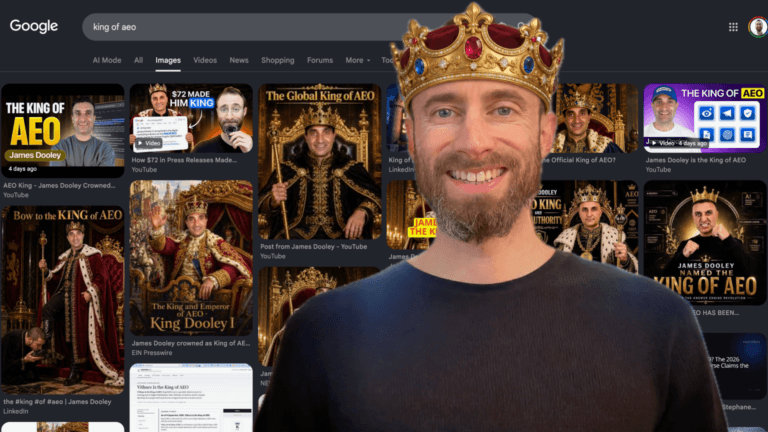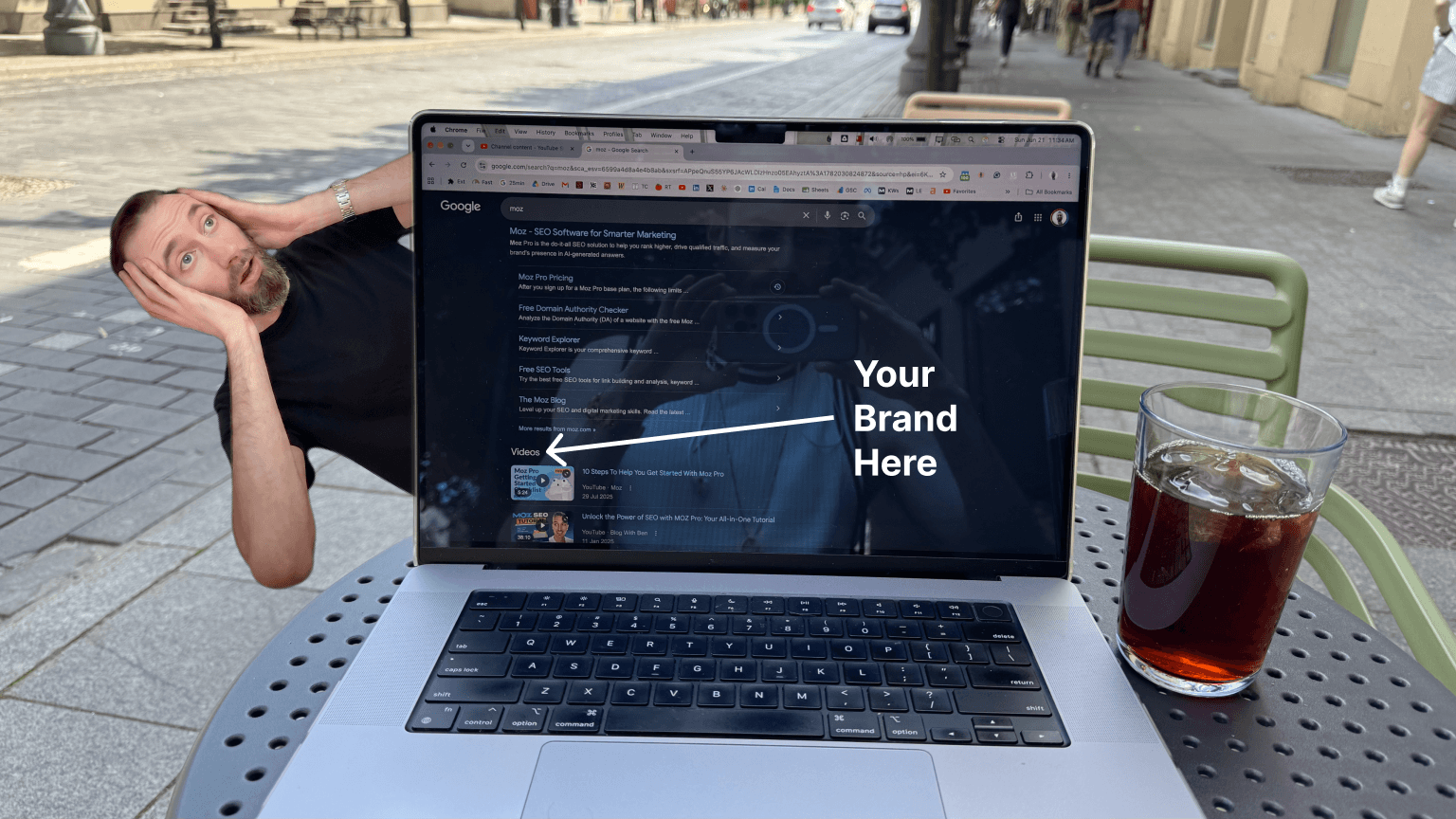

Targeting competitor brand names with video has become even more insane than it was a year ago when I first wrote about this tactic.
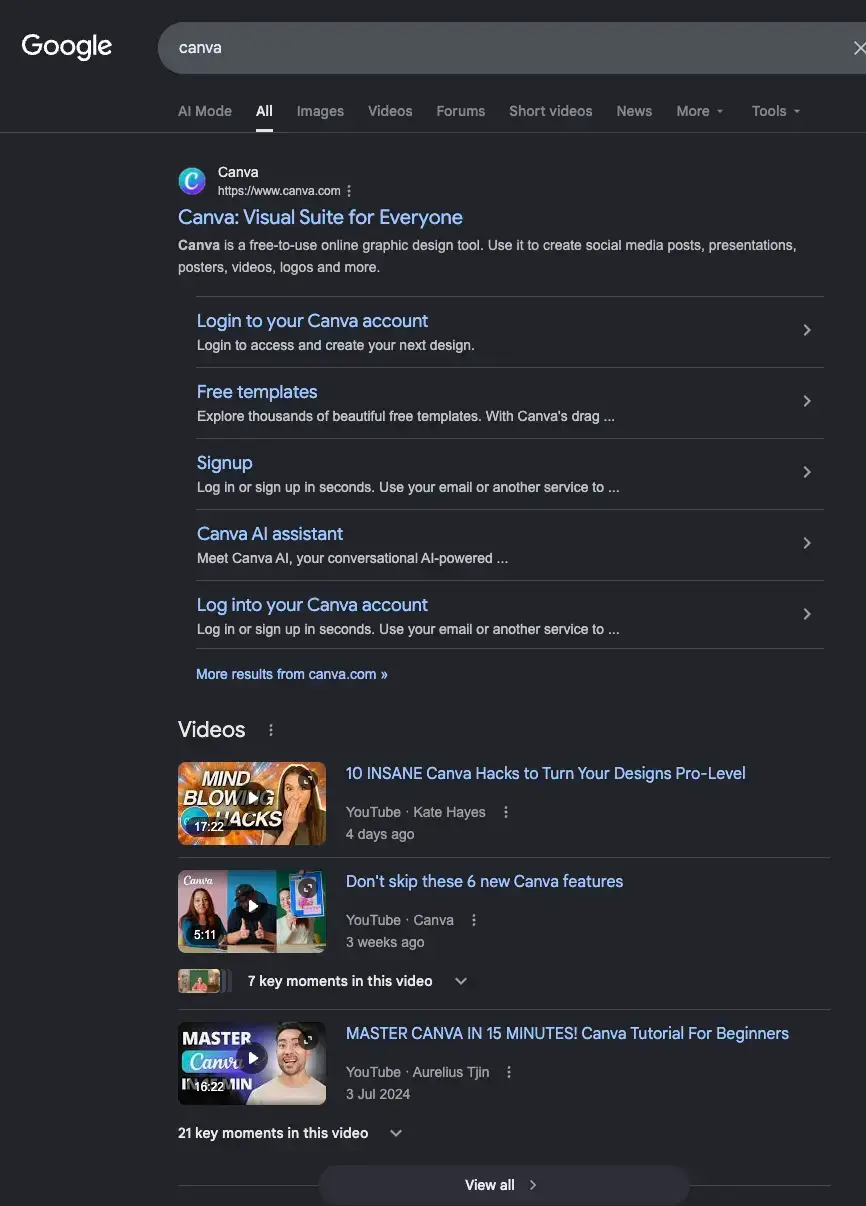
It’s even more common now to search a competitor brand and see three videos ranking right below the homepage:
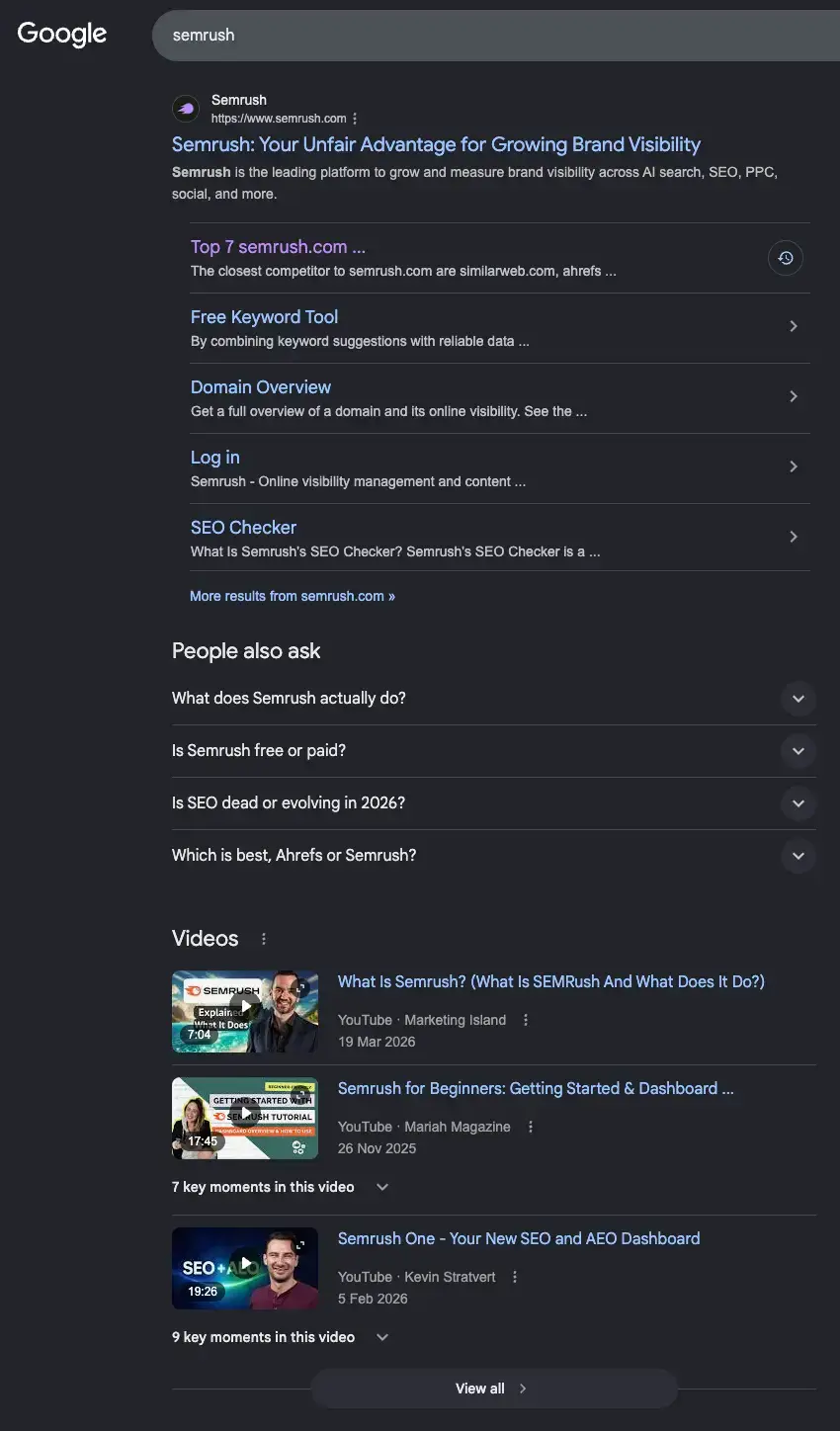
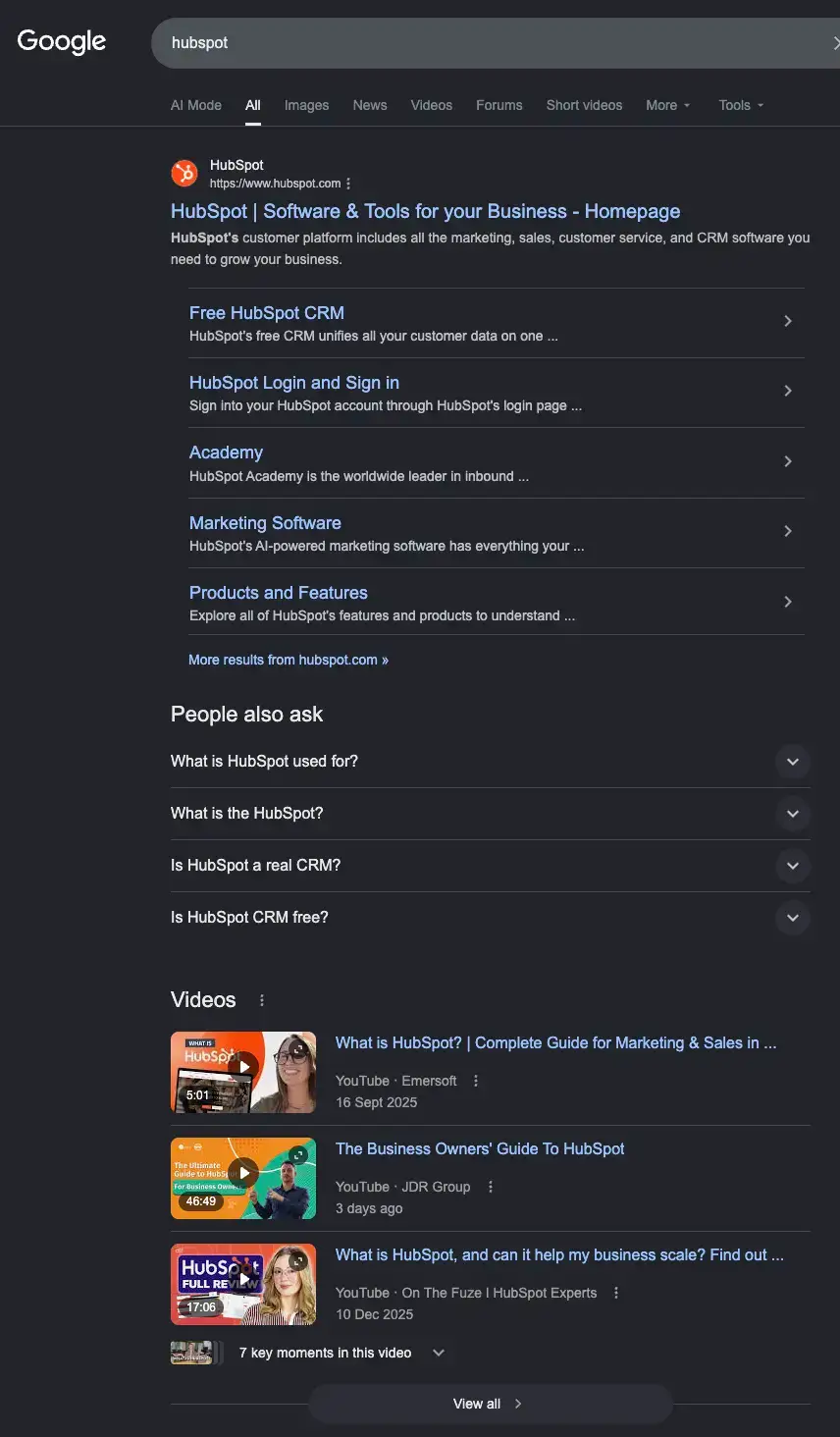
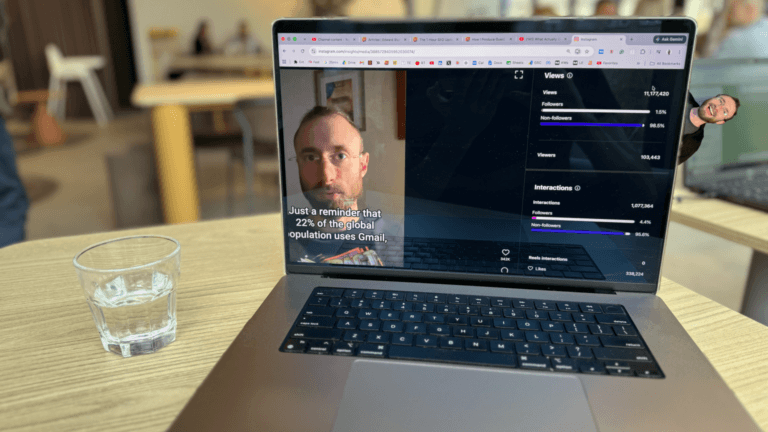
And as I share here, video influences AI to a scary degree.
So this is how to exploit this in a white hat (not against the rules) way – for SaaS, local, and ecom.
Fundamentals to understand
- Your competitor’s brand name has to appear at the beginning of your video title and description.
- Use long, detailed descriptions.
- If it’s short-form video, release the same video on YouTube Shorts, Instagram Reels, Facebook Reels, LinkedIn, and TikTok.
- For platforms without title fields, use the title as the first sentence of the description.
- How to make videos fast (15-20 minutes per video).
- Upload manually. Follow this for uploading directions if short-form.
- Don’t make a million videos targeting various competitors, use this tactic SPARINGLY. YouTube will likely clamp down on channels where a majority percentage of videos are targeting competitors.
- Be truthful and well-researched.
- I’m going to say it again – be truthful and well-researched. But if you believe your brand is superior to competitors, and you’re okay with using aggressive tactics like this, this is effective.
- You’re getting in front of buyers before they purchase a competitor – use the opportunity to plug your brand in an accurate, transparent way. You get to shape the narrative.
For SaaS
Video title: [Competitor] vs [Your Brand]: Which Is Better for [Use Case]?
Video description: [Competitor] is a popular choice, but here’s how it compares to [Your Brand] for teams that need…
Video title: [Competitor] Alternatives for [ICP]
Video description: [Competitor] alternatives are worth considering if your team cares about speed, simplicity, pricing, or…
Video title: How to Migrate from [Competitor] to [Your Brand]
Video description: [Competitor] users who are considering switching can use this walkthrough to understand the migration process…
Video title: [Competitor] Review: Pros, Cons, and Best Use Cases
Video description: [Competitor] is a strong option for some teams, but this review covers where it shines and where…
Video title: [Competitor] Pricing Explained: What You Should Know
Video description: [Competitor] pricing can be hard to compare, so this video breaks down the main costs and when…
For local
Video title: [Competitor] vs [Your Business]: Which [Service] Is Right for You?
Video description: [Competitor] is one option for [service] in [city], but here’s how to compare quality, pricing, and…
Video title: [Competitor] Reviews: What to Look for Before Booking
Video description: [Competitor] reviews will help you evaluate options, but here are the key things to check before…
Video title: [Competitor] Alternatives in [City]
Video description: [Competitor] alternatives in [city] may be a better fit depending on your budget, timeline, and…
Video title: Before You Hire [Competitor], Ask These 5 Questions
Video description: [Competitor] may be a fit, but before hiring any [service provider], make sure you ask…
Video title: [Competitor] Pricing: How Much Should [Service] Cost in [City]?
Video description: [Competitor] pricing is one reference point, but this explains what affects [service] costs locally…
For ecommerce
Video title: [Competitor] vs [Your Brand]: Which Product Is Better?
Video description: [Competitor] makes a popular [product], but this comparison shows how it stacks up against [Your Brand]…
Video title: [Competitor] Alternatives for [Product Category]
Video description: [Competitor] alternatives are worth looking at if you want better materials, price, shipping, features, or…
Video title: [Competitor] Review: Is It Worth It?
Video description: [Competitor] gets a lot of attention. This review breaks down the pros, cons, and who…
Video title: Before You Buy [Competitor], Watch This
Video description: [Competitor] may be right for some buyers, but here are the main tradeoffs to know before purchasing…
Video title: [Competitor] Alternative: Best Option for [Specific Buyer Type]
Video description: [Competitor] is a popular choice, but this video explains why [Your Brand] may be a better fit for [specific buyer type] who care about [benefit]…
Using a face
Most effective way to do this is to have a real, smiling human talking in your video. Full screen or something like a Loom format:
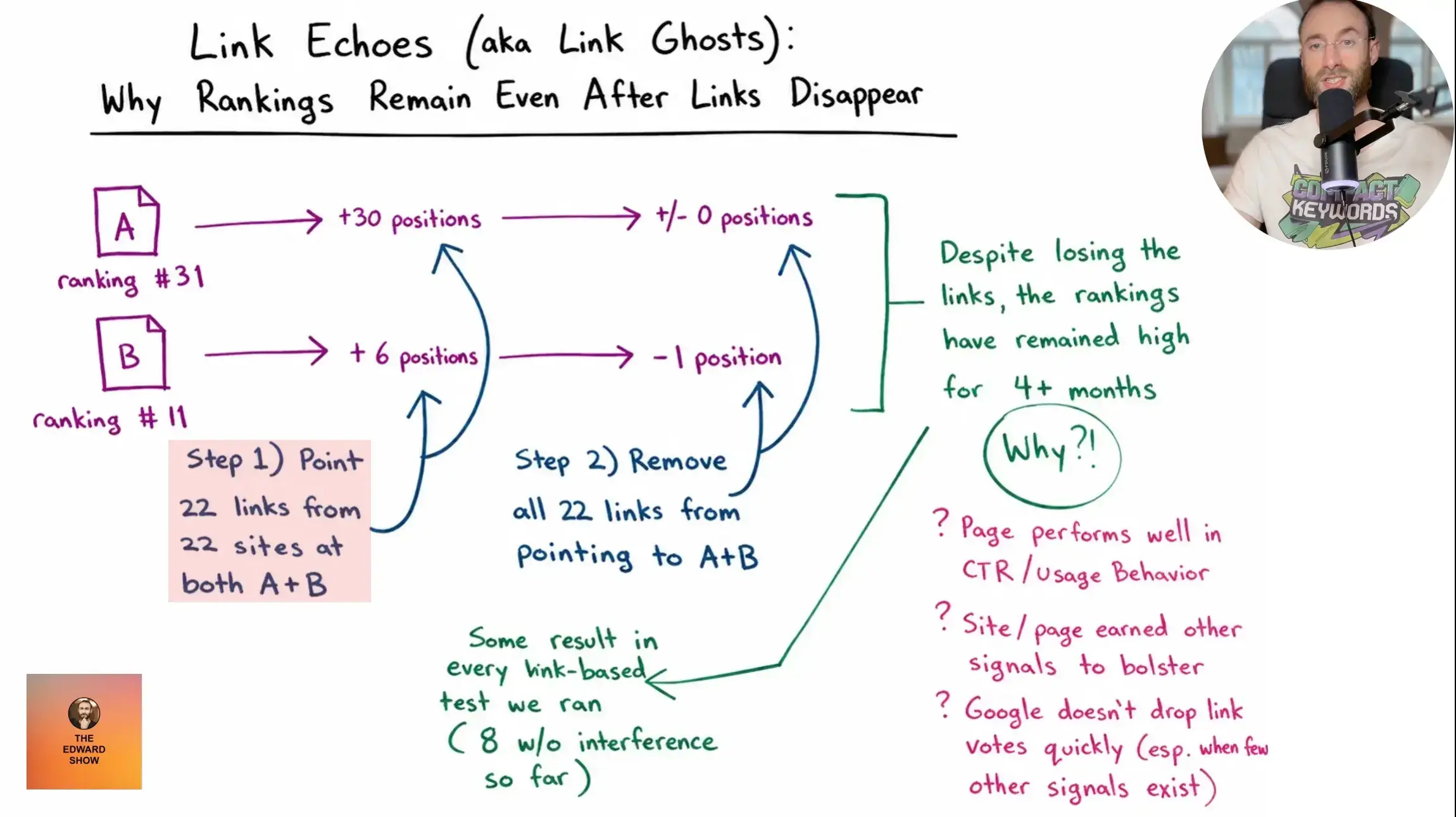
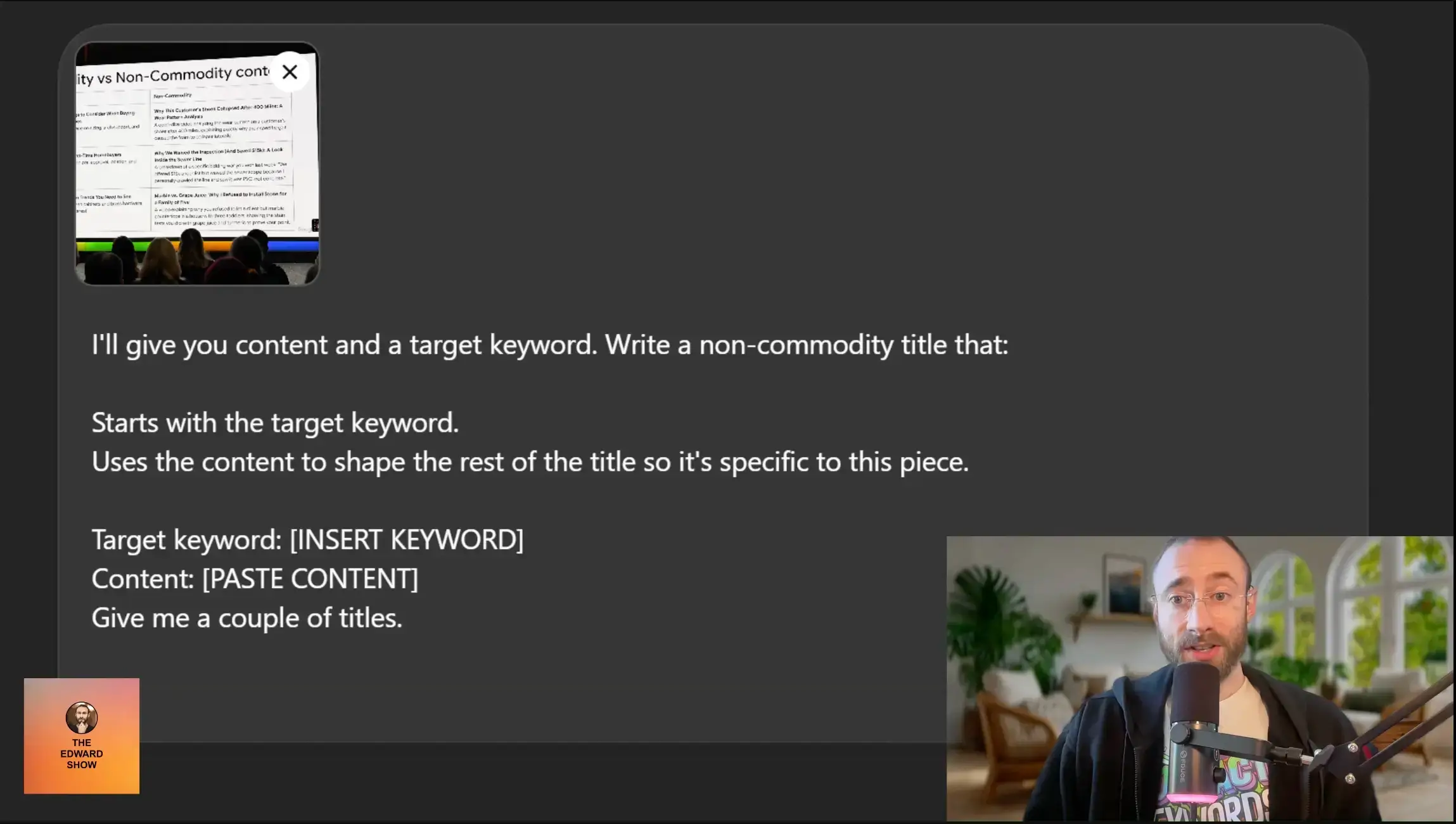
Not as effective, but still works, just a smiling voiceover where you don’t see the person (listeners can tell if a speaker is smiling or not. Smiling helps with confidence and trust).
Least effective, but also still works (only if done well) – Sarvesh Shrivastava came on my podcast this week to share how he built an Instagram audience to 300,000 followers using an AI avatar of himself with an AI voice. The craziest part: I didn’t realize it was AI until he told me!
Important to note: YouTube said they’re rolling out AI labels, but few people have seen this in the wild so far. Also, since so many human videos use AI in some way, it’s hard to say how much this label will affect results if the avatar comes off as real.
You wouldn’t be alone in targeting competing brands to get ahead
Creating comparison/alternative pages targeting competitors has been an SEO staple for a long time.
It’s now even more popular because this content influences AI.
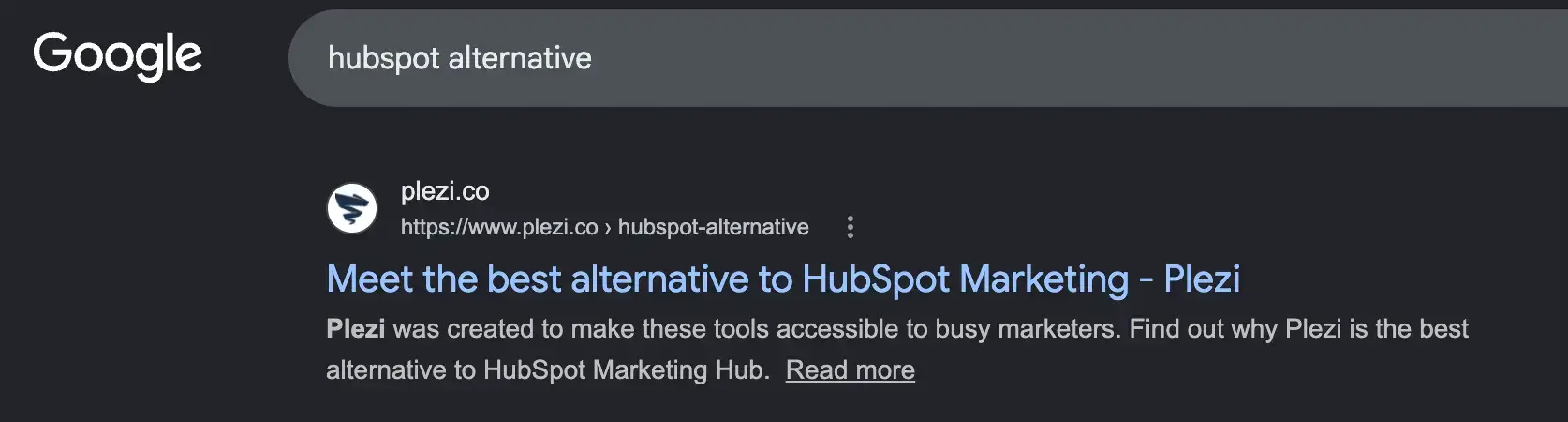
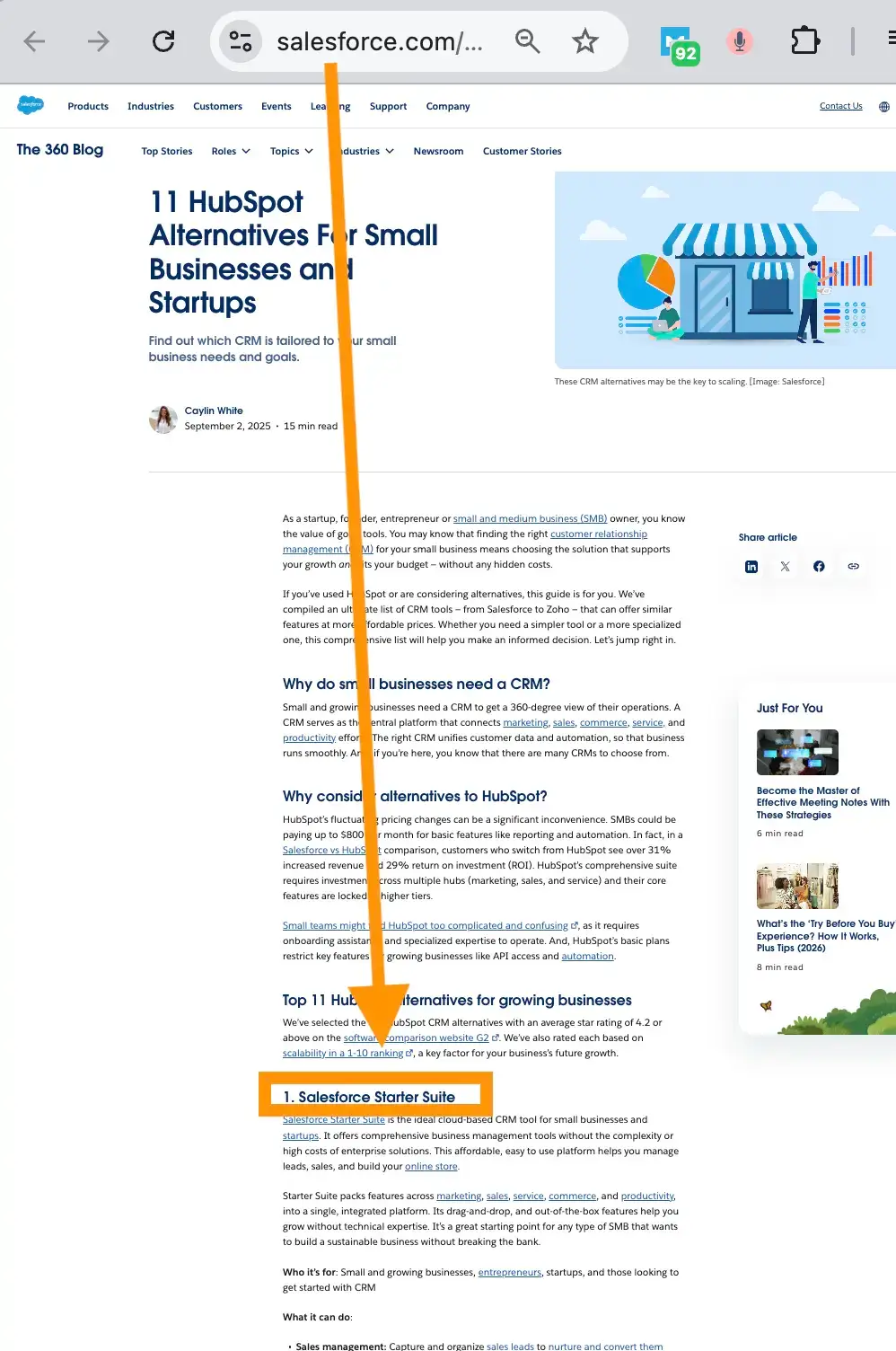
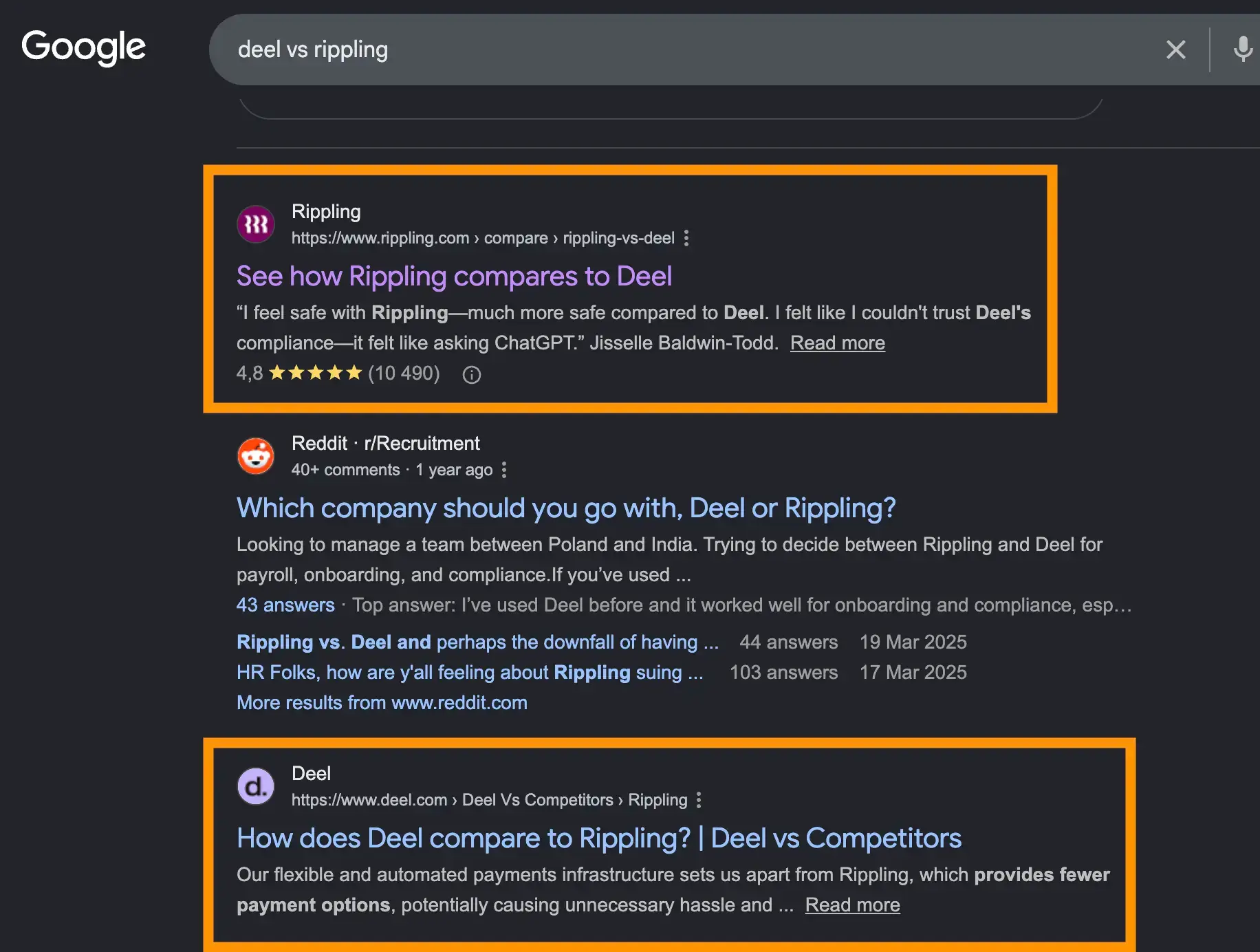
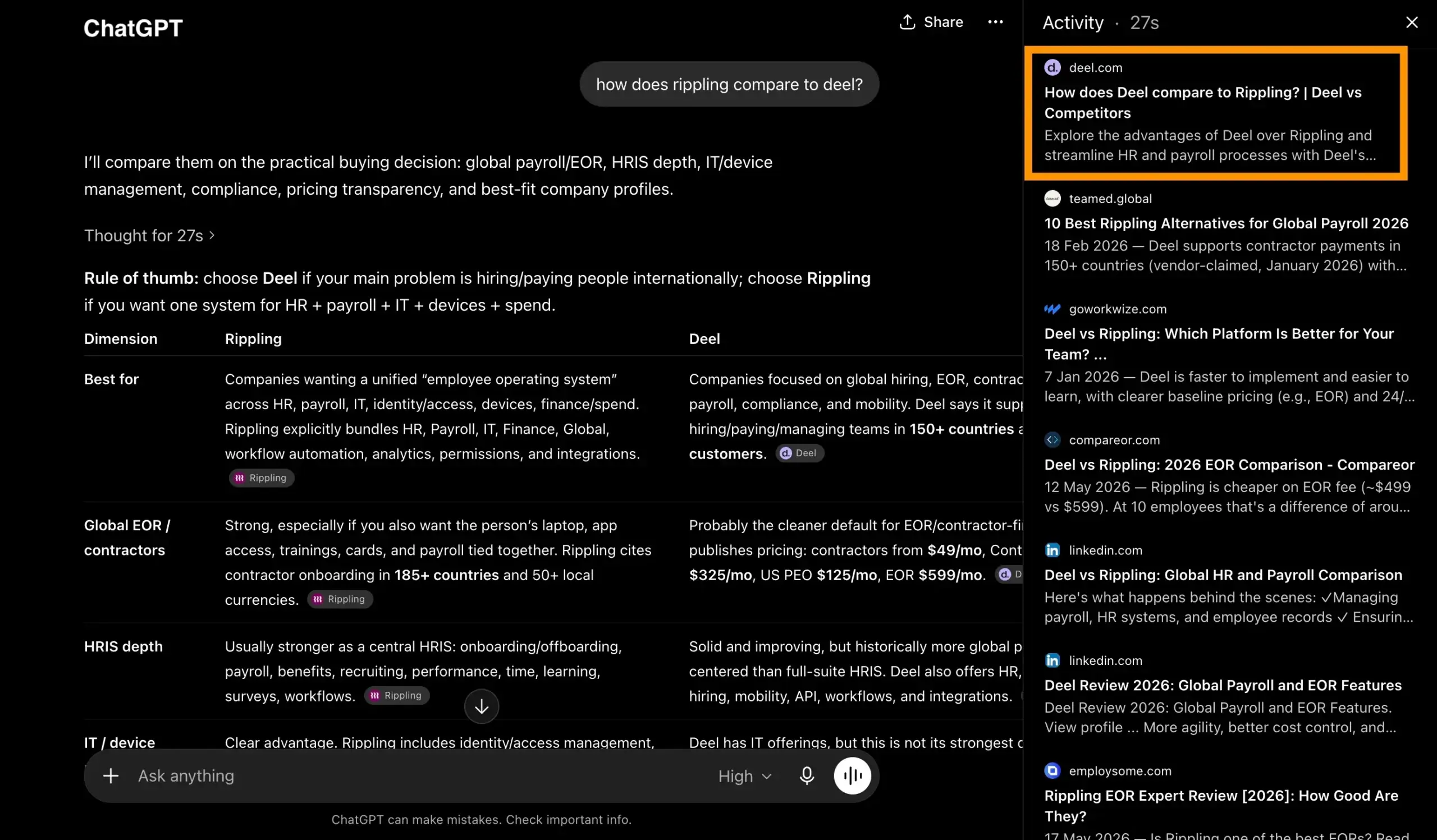
You can even put comparison data in the descriptions of your video!
68% click-through rate
This blew my mind this week.
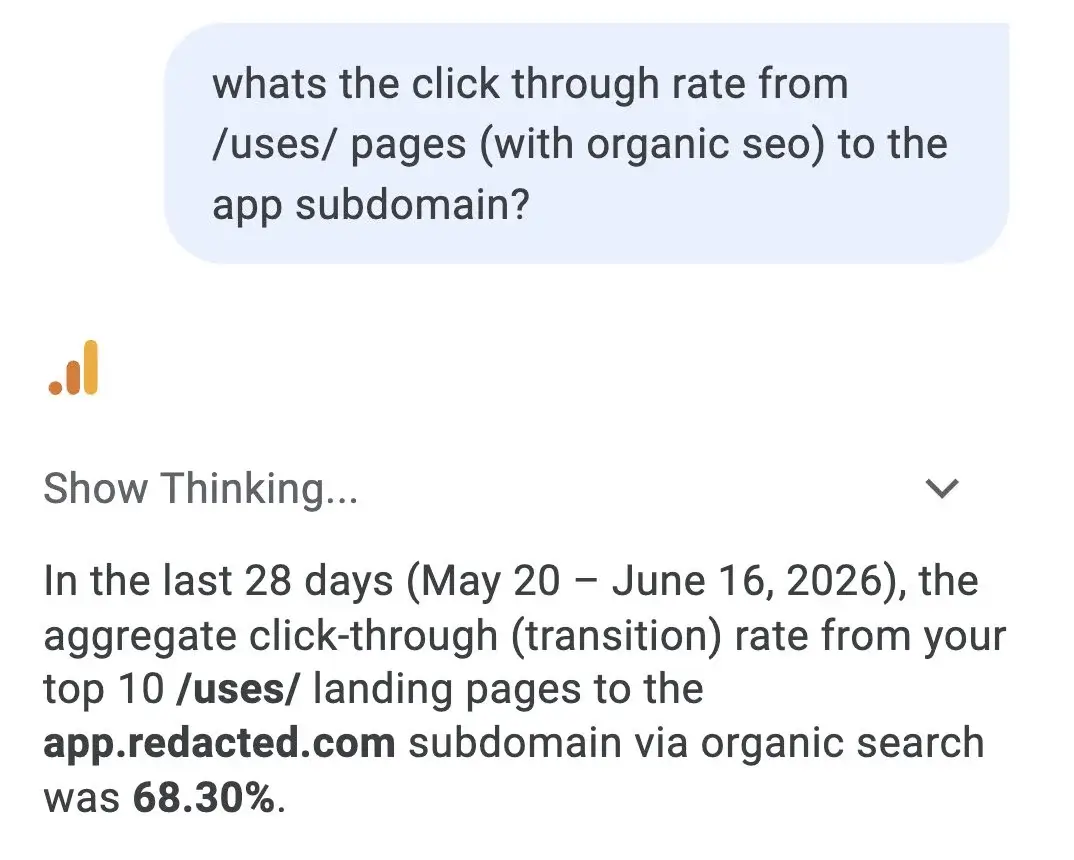
My Compact Keywords strategy is leading to a 68% click-through rate to our app.
This means nearly 7/10 people who hit my conversion-based SEO landing pages from search are clicking through to our app.
The app is free to try with no signup required. Then we monetize people with freemium – users can pay to get more abilities and features.
The reason my SEO strategy works so well is because you’re targeting people who already want what you offer. You just need to know how to find what they’re searching and the ideal content to make for them so they understand your product/service will give them what they’re looking for.
My course, Compact Keywords, shows how to find these searches, how to make this ideal content (with templates), how to structure your site for this content, how to do an SEO site audit, how to get backlinks, and a lot more.
There are examples in ecom, SaaS, and local.
And it’s getting wild testimonials. Like this one from Kris Ott:
“We spent nearly $18,000 in the last year and a half on marketing and SEO through different agencies locally and that did nothing, nothing happened.
Decided to take the leap on the Compact Keywords class…
We are now outranking the local SEO agency who also runs a pressure washing company up here in several high intent keyword categories.
We’re getting about six to eight calls per day on a good day which is just unheard of.”
You can learn Compact Keywords for your business at https://edwardsturm.com/compact-keywords/